The short answer
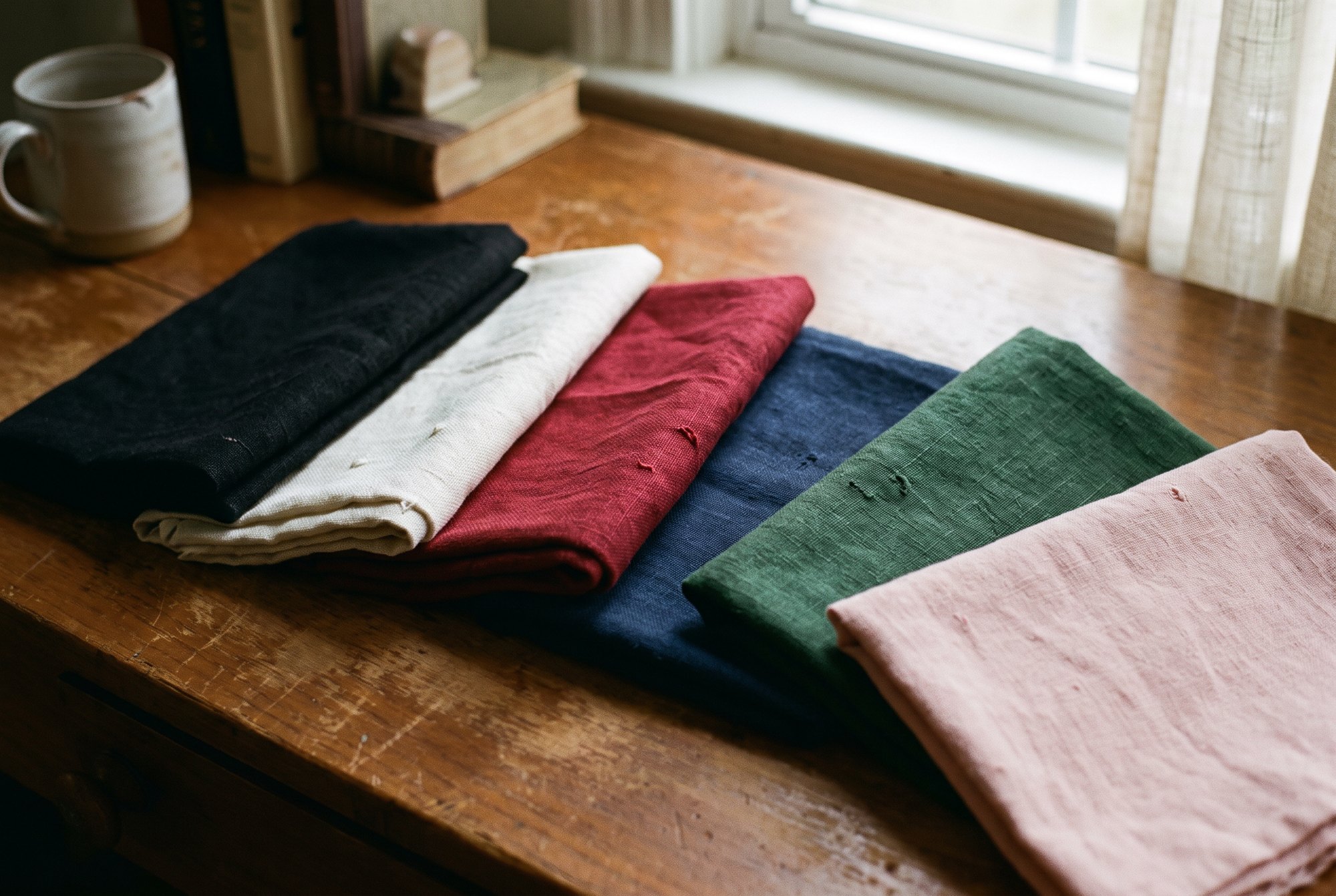
There is no colour that suits all Indian skin tones, and no colour that suits nobody. Deep, saturated colours such as Neel Blue and Arav Green tend to look good across a very wide range of Indian skin tones. Noor Black and Rui White give strong contrast that works on most people. Agni Red and Gulabi Pink depend more on what sits next to your face. The reliable method is to try a colour near your face in daylight and see how you feel.
This guide to colours for Indian skin tones is general and hedged on purpose. Skin, hair, eye colour and personal taste all matter, and fashion advice that promises a perfect match is usually oversimplified. Use what follows as a starting point for your own experiments.

Start with contrast, not with a label
Indian skin tones cover an enormous range of depth and undertone, as human skin colour does everywhere. Rather than sorting yourself into a category, think about contrast: how much lighter or darker is the garment than your skin, and how does that look near your face?
- High contrast (a very dark or very light garment against your skin) gives a clean, sharp look.
- Low contrast (a colour close to your own depth) gives a soft, blended look, and can sometimes look flat near the face.
Neither is wrong. It is a choice of mood. But knowing which one you are making helps you avoid the colours that feel “off” without any clear reason.
Undertones and Indian skin tones
You may have heard of warm, cool and neutral undertones. Warm skin leans golden or olive, cool leans pinkish or bluish, and neutral sits in between. It is a real idea in colour theory, but the popular tests, like checking the colour of your veins or seeing whether silver or gold suits you better, are not always reliable, and lighting changes what you see.
A simpler test for Indian skin tones: stand near a window in daylight, hold each garment up under your chin, and look at your face, not the garment. Do you look rested and clear, or tired and a little grey? Ask someone you trust. Your own reaction is worth more than a rule.
How the six colours behave on Indian skin tones
The following is a guide, not a promise. Every EKVAAR colour comes from our six permanent colours, and each has a fixed shade so what you see on the page is what you get.
Noor Black
Strong contrast against most Indian skin tones, which is why it works on so many people. On very fair skin it can feel stark near the face, and on very deep skin it can blend, so a light collar, a cap or a chain can help. It is the easiest colour to build around.
Rui White
A clean, bright base that stands out sharply against medium and deeper skin and looks softer against fair skin. If white feels harsh near your face, wear it under a darker layer, or choose it for bottoms and use a deeper colour on top.
Neel Blue
A very deep blue that sits close to black. It gives many of the benefits of black with a slightly softer edge, and many people find it flattering across a wide range of Indian skin tones. It is a good first colour if black feels too heavy.
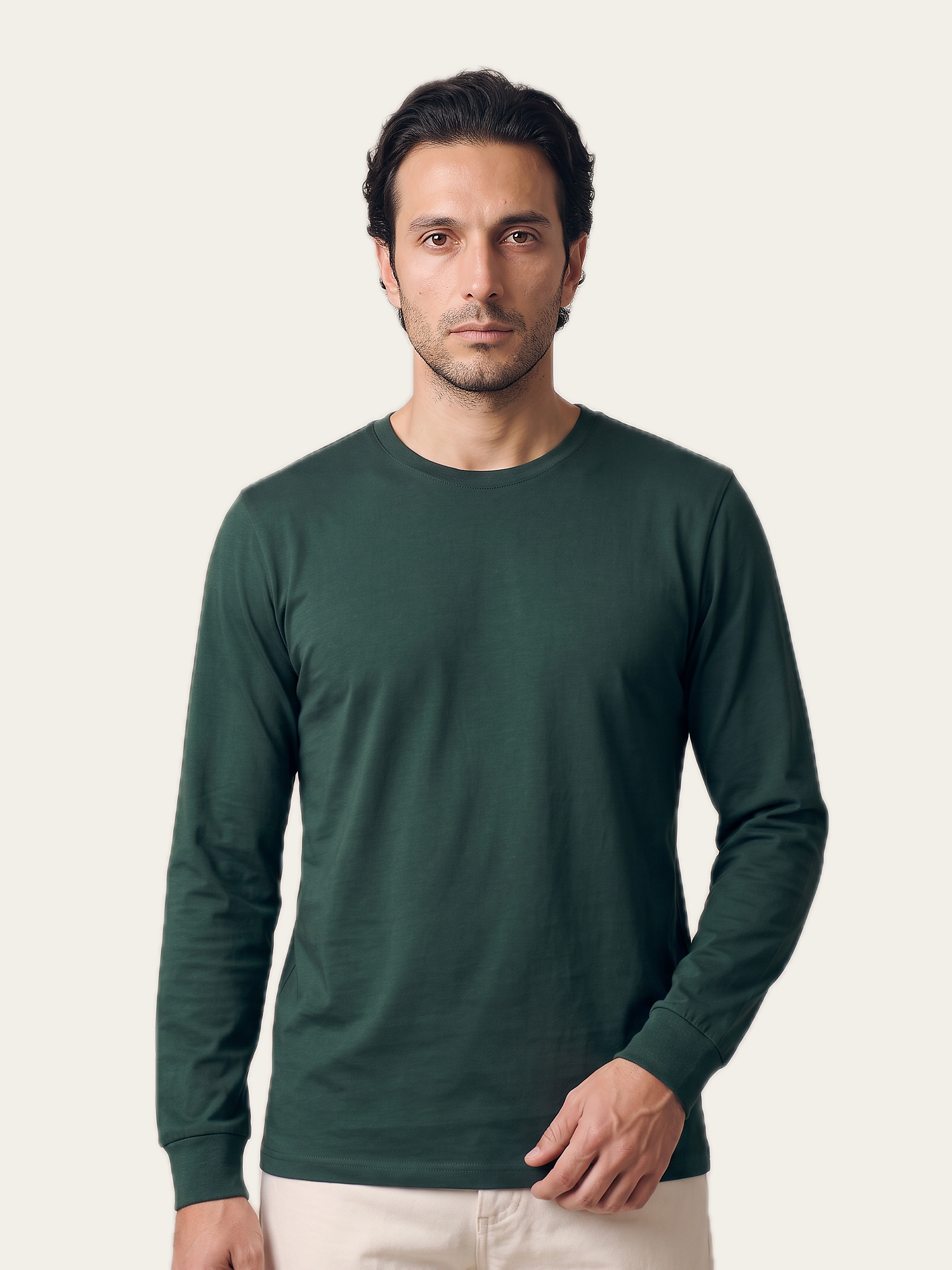
Arav Green
A deep forest green. Deep greens tend to be forgiving on Indian skin tones, because they are dark and quiet without being flat. Our Arav Green outfits guide goes into this colour in more detail.
Agni Red
A strong, warm red. Red near the face can make some people look lively and others a little flushed, and it depends on your natural colouring. If you are unsure, try it in a garment worn a little lower, like a tee under an open jacket, before wearing it as a hoodie.
Gulabi Pink
A pale, soft pink. It tends to stand out clearly on medium and deeper Indian skin tones. On fair skin it can look very delicate, so pairing it with a deeper colour keeps it from washing out. It works well for pieces that sit away from the face, such as trousers or a crop.

Try before you commit: a low-risk way to test
Buying a colour you have never worn is the riskiest part. Start small and easy.
- Pick an inexpensive piece. The CORE Crew Tee (₹749) comes in all six permanent colours, and the FLEX Crew Tee (₹849, 95% cotton and 5% elastane) does too. A tee is the quickest way to learn what a colour does for you.
- Look in daylight. Indoor bulbs change colour. Step near a window.
- Take a photo. Cameras are blunt and honest, and photos reveal what you cannot see in a mirror.
- Wear it once before deciding. First impressions in a mirror can mislead. See how you feel after a day.
Then step up to a hoodie. The ORIGINAL Hoodie (₹1,299) is also available in all six, so a colour you like in a tee will translate directly.
Colour and outfit, not colour alone
What surrounds the colour changes it. A colour you find harsh alone may look better with a good neighbour, and a great colour can look flat if everything around it is the same.
- Tone on tone: Neel Blue with Noor Black is calm and quiet, and hard to get wrong.
- Light with dark: Rui White with Noor Black or Neel Blue gives contrast that suits many Indian skin tones.
- One bright, rest quiet: Agni Red or Gulabi Pink as a single accent, with everything else dark or plain.
If you want a system for combining all six, our six colour wardrobe system shows how they work together.
What other people forget: hair, eyes and setting
Indian skin tones are only one part of the picture. Dark hair near a Noor Black collar blends into a single mass, while a light collar breaks it up. Light or hazel eyes often stand out against deep blue and green. Jewellery, glasses and even the wall behind you change how a colour reads. When a colour disappoints, the cause is often a combination, not the colour alone.
When advice and instinct disagree
If a colour supposedly “suits” you but does not feel like you, skip it. If a colour supposedly “does not suit” you but makes you feel good, wear it. Clothes are worn by people, not charts. The best reason to choose a colour is that you keep reaching for it.
FAQs
Which colour suits most Indian skin tones?
No single colour suits everyone, but deep, saturated colours such as Neel Blue and Arav Green are forgiving across a wide range. Try a few near your face in daylight and go with what you like.
Does Rui White suit darker skin?
Often, yes, because the contrast is strong and clean. On lighter skin it can look softer, so many people pair it with a darker layer or accessory near the face.
Can I wear Gulabi Pink if I have a deeper skin tone?
Yes. A pale pink usually stands out clearly against deeper Indian skin tones. If it feels too soft, add a darker piece such as Noor Black or Neel Blue next to it.
What is an undertone, and do I need to know mine?
Undertone is the subtle warm, cool or neutral cast beneath your skin colour. It is a helpful clue, but it is not essential, and simple tests are not always reliable. Trying colours on in daylight is usually more useful.
When you are ready, browse the full EKVAAR range.