Notebook paper GSM: what the numbers mean
On notebook paper, GSM stands for grams per square metre (also called grammage), a measure of how heavy a sheet of paper or card is. A 70 GSM page is ordinary writing paper of a familiar weight. A 300 GSM cover is thick, stiff card. In the Original Notebook and Original Notepad, that pairing gives you soft-turning pages inside a cover that holds its shape.
What GSM measures, and what it does not
Take a square of paper one metre on each side. Weigh it. If it weighs 70 grams, the paper is 70 GSM. That is all the number tells you: weight per area. It does not tell you the finish, the coating, or how well a pen writes on it. Two sheets of 70 GSM notebook paper can feel different if one is smooth and the other has a toothy surface.
Weight still matters because it usually tracks thickness. Heavier paper is thicker, stiffer and less see-through. Lighter paper is thinner, bends easily and lets writing show through from the other side.
A rough scale for notebook paper and card
| GSM | Typical feel | Common use |
|---|---|---|
| Around 60 to 80 | Thin, flexible | Notebook pages, photocopy paper |
| Around 100 to 120 | Firm, smooth | Fine stationery, brochures |
| Around 250 to 350 | Stiff card | Book covers, business cards |
These bands are general ranges from common stationery use, not fixed rules, and makers vary. Use them as a guide to what a number roughly feels like.
What 70 GSM feels like when you write
70 GSM notebook paper sits in the everyday range. It is thin enough that a notebook of 120 pages stays slim and light in a bag, and firm enough to write on comfortably with a ball pen or a gel pen. Both the Original Notebook and the Original Notepad use 70 GSM paper for their 120 pages, ruled or unruled.
What to expect from notebook paper at this weight:
- Ball pens and gel pens work as you would want. Writing is crisp and dries quickly.
- Pencils glide well, and erasing is easy.
- Fountain pens and markers may show through on the reverse. If you use these, write on one side of the page, or place a sheet behind it when you write.
- Highlighters can ghost slightly. Use a light hand.
That is not a flaw. It is the trade for a light, slim notebook that opens flat, fits into a daybag, and can be filled without worry. Lighter notebook paper is a good match for note-taking, lists, planning and rough work, where you write fast and move on.
Why the cover is 300 GSM
A cover has a different job. It protects the pages, takes the knocks in a bag, and survives being pulled out fifty times a week. At 300 GSM it is roughly four times the weight of the notebook paper inside, which is why it feels like a board rather than paper.
Two benefits follow. The first is stiffness: the notebook keeps its shape when you write on your lap or on a standing desk. The second is durability: corners resist folding, and the cover does not curl at the edges the way thin card does over a semester of use.

The two notebooks, side by side
Both share the same paper and cover weight, so the choice is about the binding and the look.
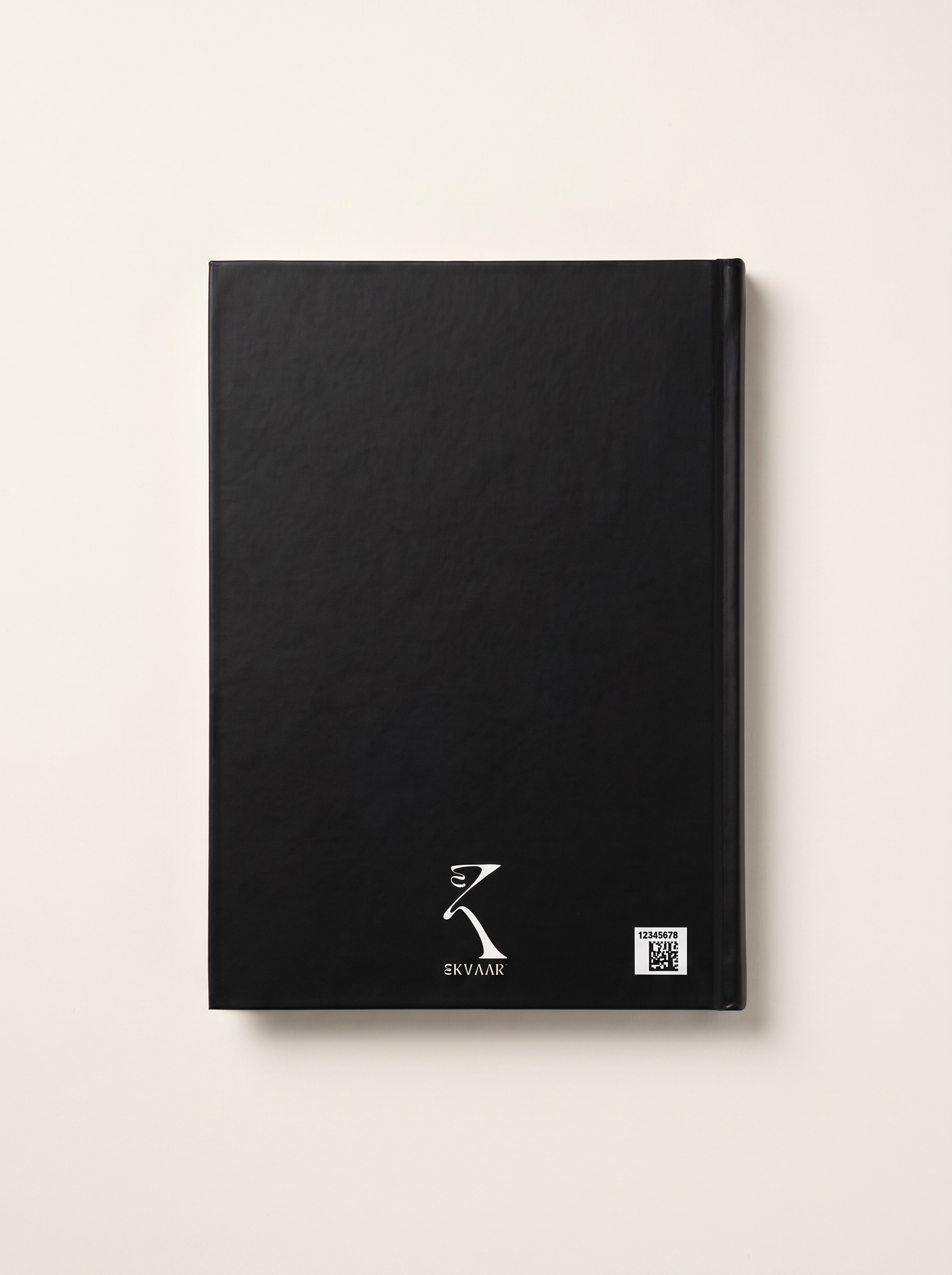
- The Original Notebook is an A5 notebook at ₹399. It has a black cover carrying the EKVAAR monogram and 120 pages of 70 GSM paper, ruled or unruled.
- The Original Notepad is a wire-bound A5 notepad at ₹299. It has a white cover in the EKVAAR pattern and the same 120 pages of 70 GSM paper, ruled or unruled.
The notebook is the one to keep and revisit, and the notepad is the one for working things out. The wire binding lets the notepad fold back on itself and lie flat, which suits people who write standing or with one hand. Our comparison, Original Notebook or Original Notepad, goes through the differences in detail.

Matching notebook paper weight to how you use it
If you take fast lecture notes
70 GSM notebook paper is a good choice. You write quickly, flip often, and want a notebook that stays light in a bag. Ruled pages help keep long lines straight.
If you sketch or draw diagrams
Unruled pages give you a clean field for diagrams, and 70 GSM handles pencil and fine liners well. For heavy ink or wet media, you would want a thicker paper than this, so choose accordingly.
If you write daily plans or diary pages
A ballpoint or gel pen on 70 GSM gives sharp, quick-drying lines. If you write on both sides of a page with a fountain pen, test a page first to see how much shows through.
If you carry it everywhere
The 300 GSM cover matters most here. A stiff cover means the pages inside stay flat, even in a crowded bag or on a bus seat. For desk-bound use, see desk essentials from Origins.
A small test you can do at home
To feel what 70 GSM means, take a sheet of ordinary printer paper. Most office paper is in the same range, around 70 to 80 GSM. Write on it with the pens you use daily. Flip it over and look at the back. If you are happy with what you see, you will be happy with this notebook paper. If a pen shows through more than you like, switch to a finer tip, or use just one side.
Looking after notebook paper and card
- Keep the notebook away from water. Paper swells and wrinkles when wet, and a card cover can warp.
- Store it flat or upright in a bag pocket, not under heavy objects.
- Avoid leaving it in direct sun or in a hot car, which can yellow the pages and curl the cover.
- Use a bookmark instead of folding corners.
Small habits protect a notebook you plan to keep for a year or more.
Ruled or unruled: a note on the pages
Both products offer ruled or unruled pages, and the notebook paper weight is the same either way. Ruled pages help with long-form notes, lists and handwriting that drifts. Unruled pages suit sketching, mind maps, mixed text and diagrams, and anyone who finds lines distracting. If you do a bit of both, choose the one you use for your main work and keep a second small pad for the other.
How notebook paper weight affects durability
Heavier notebook paper resists tearing and creasing better, and lighter paper does so less. At 70 GSM, the pages are made for everyday handling, not for repeated rubbing or heavy erasing. If you tend to scrub out mistakes hard, use a soft eraser and a light hand, and the page will hold. If you tear out pages often, do it slowly along the binding to avoid ripping the next sheet.
The cover carries most of the durability. Because the cover is 300 GSM, the block of pages stays flat and protected. A thinner cover would bend, and a bent cover pulls the pages out of line. That is a common reason cheap notebooks look worn within weeks.
How many pages is 120 pages?
The 120 pages in these notebooks give you a decent amount of writing room. If you write on both sides and use about a page a day, that is roughly a couple of months of daily notes. If you use a page only for a new topic, it will last longer. A slim book like this is easy to carry, which is why people often keep one for each subject or project and swap them as they fill.
Pairing notebook paper with pens
| Pen type | On 70 GSM paper |
|---|---|
| Ball pen | Clean lines, quick drying |
| Gel pen | Smooth, dark lines. A fast writer may see slight smudging on damp days |
| Pencil | Works well, easy to erase |
| Fountain pen | May show through. Use a fine nib and write on one side |
| Felt-tip marker | Likely to bleed. Test on the last page first |
This table describes general behaviour of 70 GSM notebook paper, and results vary by pen and ink. A quick test on the last page tells you what to expect.
When you are ready, see the full range and reserve what you need.
FAQs
What does GSM mean on a notebook?
GSM is grams per square metre, a measure of paper weight. A higher number means heavier, thicker paper. It does not describe the surface finish.
Is 70 GSM paper good for writing?
Yes, it suits everyday writing with ball pens, gel pens and pencils. Fountain pens and markers can show through, so write on one side if you use them.
Why is the notebook cover 300 GSM?
A 300 GSM cover is thick and stiff, so it protects the pages and keeps its shape in a bag. It resists bent corners and curling.
Do the Original Notebook and Original Notepad have the same paper?
Yes. Both have 120 pages of 70 GSM paper, ruled or unruled, and a 300 GSM cover. The Notebook is bound, and the Notepad is wire-bound.