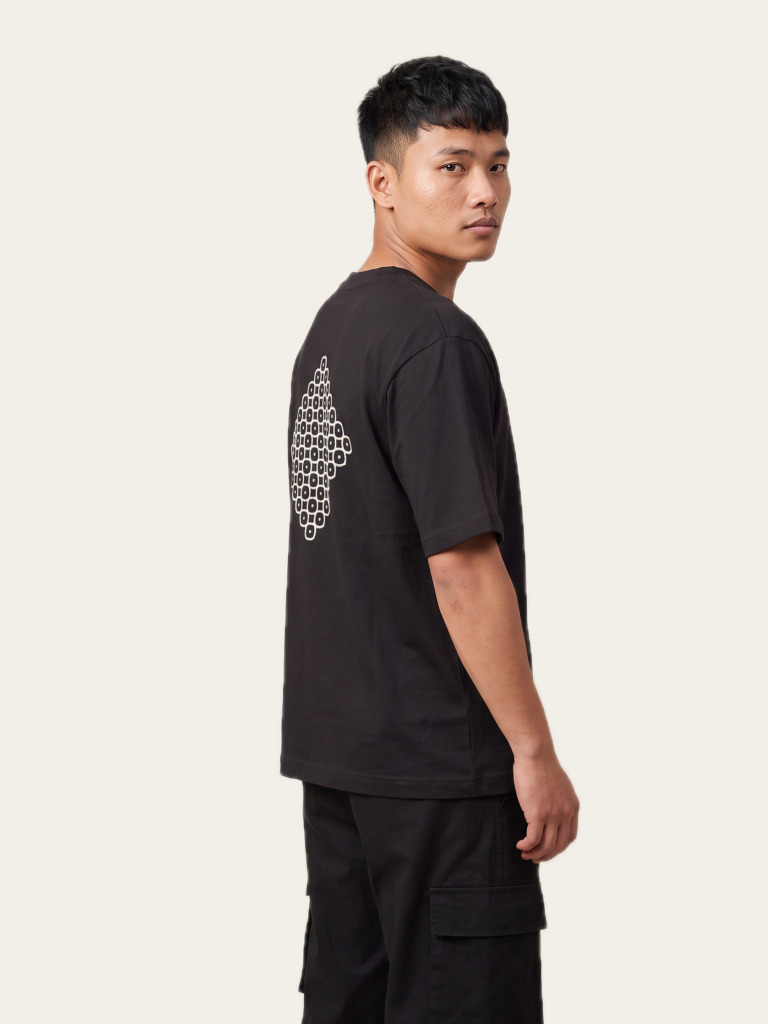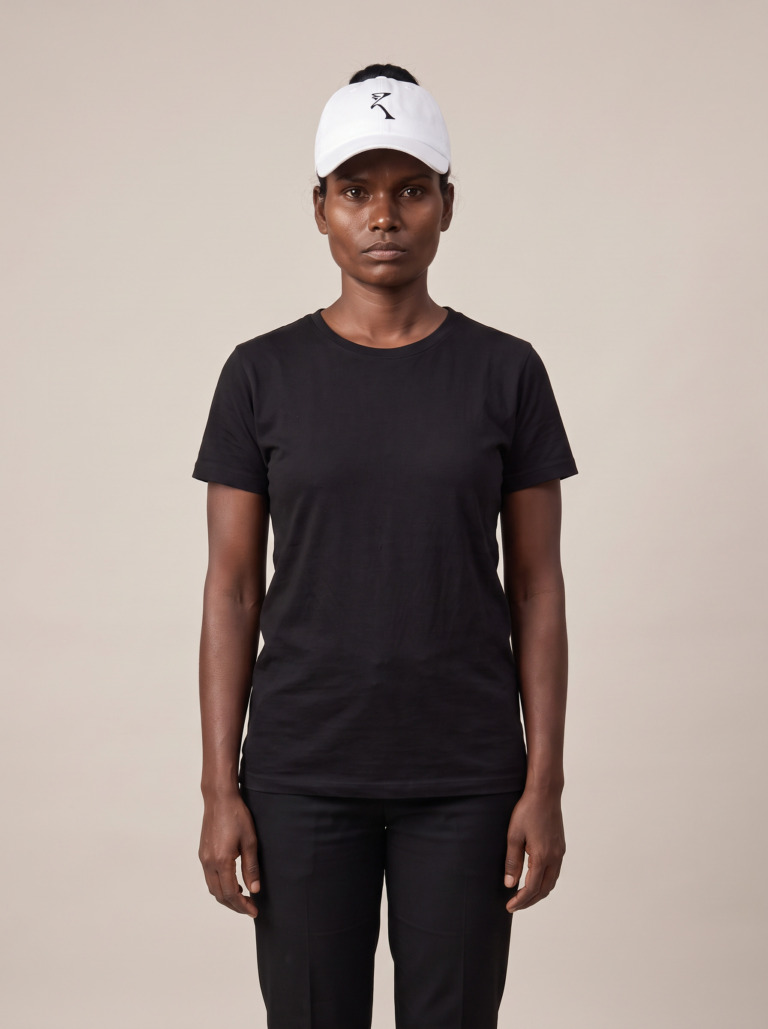

The short answer: wash black clothes inside out, in cold water, on a gentle cycle, with a mild detergent, and dry them in shade. Those five habits do most of the work. Black clothes fade when dye is rubbed off, stripped by heat and bleached by sun, so every habit below is about reducing one of those three.
Why black clothes fade in the first place
Black does not turn grey by magic. Three things do it. Friction scuffs dye and fibre off the surface. Hot water and harsh detergent pull dye out of the cotton. Direct sun bleaches what is left. A tee that goes through all three every week will look tired in a couple of months, however good the cloth was.
The good news is that all three are in your control when you wash black clothes. You do not need special products or a laundry ritual. You need a slightly different routine from the one most of us fall into on a busy Sunday.
The black clothes routine, step by step
- Turn it inside out. The outer face is the part that shows wear. Turned inside out, the face rubs against the drum and other clothes less, so fewer fibres lift and the colour stays deeper.
- Close zips and hoods. Metal teeth scratch fabric. Close zips, and pull the hood into the body so it does not tangle.
- Use cold water. Around 30 degrees or the cold setting is enough for everyday wear. Warmth opens the fibre and lets dye escape.
- Pick the gentle or delicate cycle. Lower spin speed means less friction. If your machine has a short cycle, use that.
- Use a small amount of mild detergent. More soap is not more clean. Excess detergent leaves a film that dulls dark cloth and makes it look dusty.
- Skip the bleach and the strong stain removers. Bleach is the fastest way to turn black into a rusty brown.
- Dry in shade. Hang it inside out on a hanger or a line, away from direct sun.
Sort before you load
Wash black clothes with other black clothes, or with dark colours. A white towel in the same load will leave lint on everything dark, and lint is what makes black look faded even when the colour itself is fine. Towels are the worst offenders because they shed heavily.
If you wash only a few black clothes at a time, do not squeeze in a half-empty machine’s worth of mixed items just to finish the load. A small dark load washed properly beats a mixed load washed fast.
Three pieces, three small differences
The routine stays the same, but each kind of garment has a habit worth adding. Here are three Noor Black pieces from Solids and how to look after each.
The tee: CORE Crew Tee
The CORE Crew Tee is a 180 GSM cotton crew tee in a unisex regular fit, ₹749. It comes in Noor Black, Rui White and Agni Red. A tee is worn against skin and sweat, so it is washed most often, and that is exactly why the routine matters here. Wash it after each wear or two, cold and inside out. Because it is mid-weight, it dries quickly, so there is no reason to reach for a hot dryer.

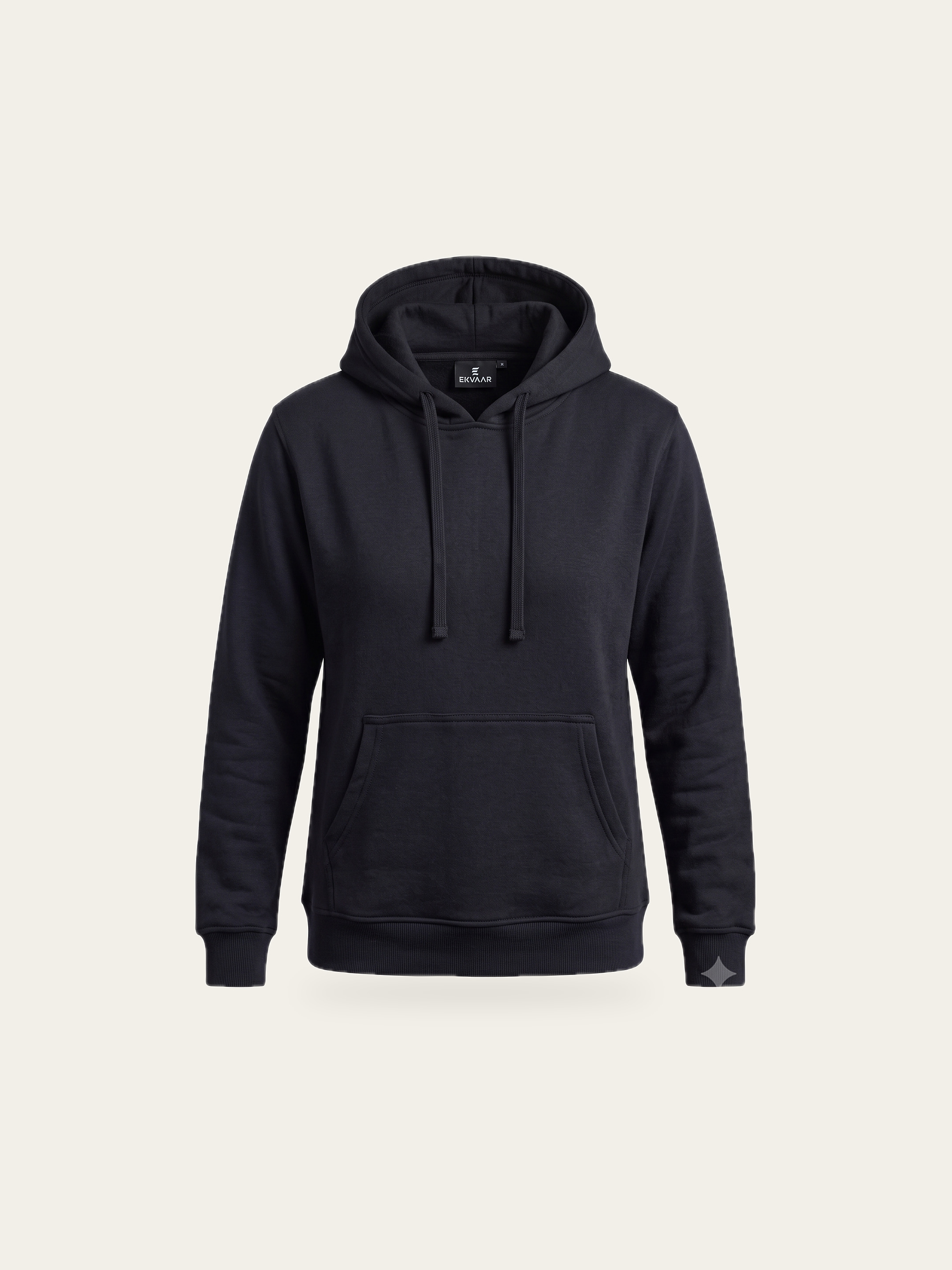
The hoodie: ORIGINAL Hoodie
The ORIGINAL Hoodie is a 300 GSM brushed cotton fleece with a lined hood and front pouch pocket, in a unisex regular fit, ₹1,299. It is offered in all six house colours, Noor Black included. Heavier cloth holds more water and takes longer to dry. Wash it less often than a tee, only when it needs it, and let it air between wears. Turn it inside out so the brushed inner side takes the friction of the drum instead of the outer face. Our longer guide, how to wash a hoodie, covers the full drying and folding routine.
The joggers: EASE Joggers
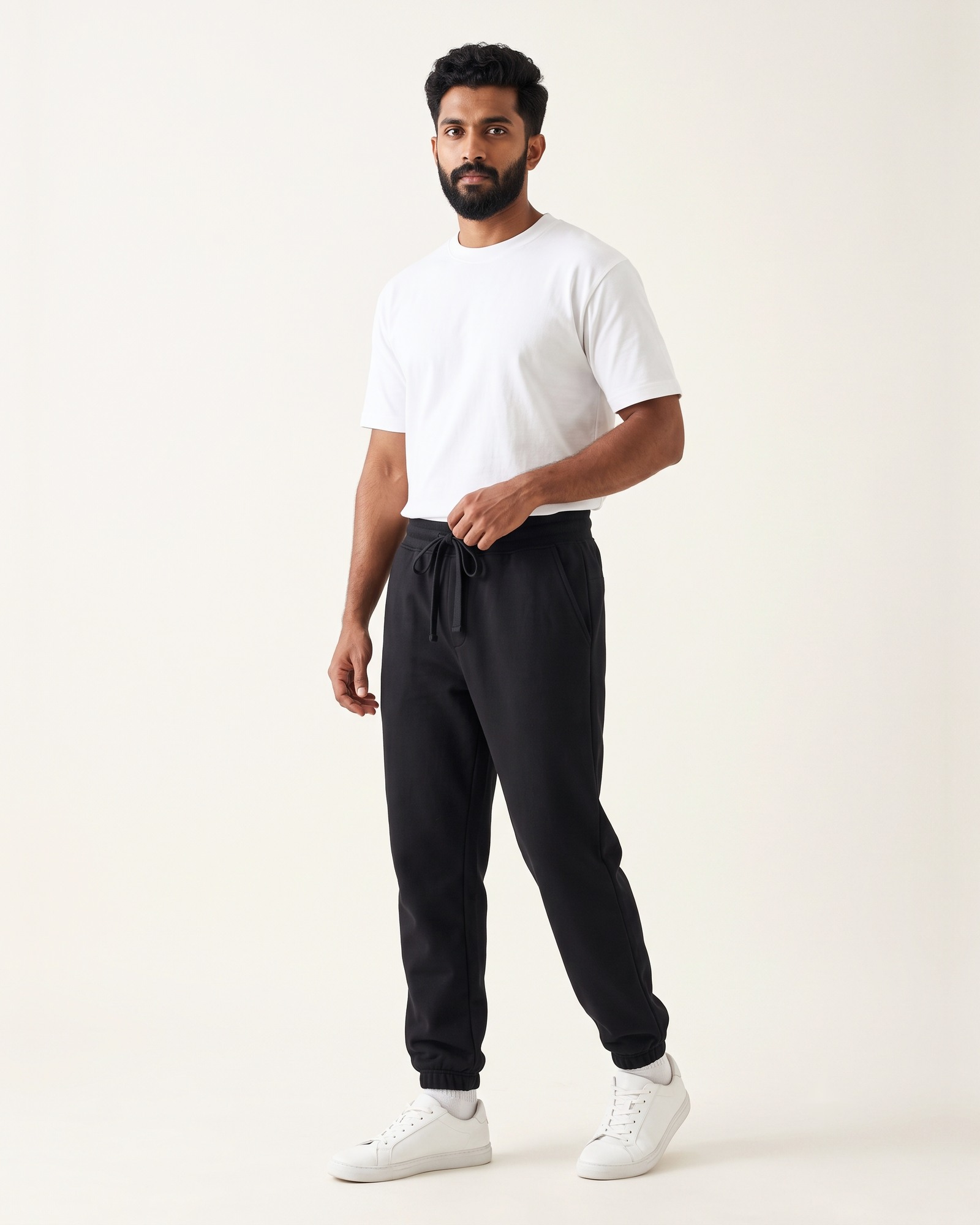
EASE Joggers are a relaxed cotton jogger with a tapered leg, ribbed waist and cuffs, ₹1,149. They are offered in Noor Black, Neel Blue, Arav Green and Gulabi Pink. Joggers rub against the inner thigh and knee every time you walk, so the friction points are different from a tee. Turn them inside out, close any drawcord into a loop or knot so it does not whip around, and hang them by the waistband to dry. Ribbed cuffs and waists dry last, so check them before you put the joggers away.
Drying: where black is won or lost
Sun is the main enemy of black clothes after the wash. A few hours on a bright balcony can lighten a dark tee more than a month of careful washing. Dry inside out and in shade, with air moving past the cloth. If you must use the sun because of the weather, dry the garment inside out and bring it in the moment it feels dry.
If you use a dryer, choose low heat and take the clothes out slightly damp. High heat shrinks cotton and leaves lint. Better still, use the dryer only for the last few minutes and finish on a hanger.
Quick fixes for faded black clothes
- Grey dusty look: usually detergent residue or hard water. Use less detergent and run an extra rinse.
- White fluff on the surface: lint from towels or other fabrics. Wash blacks separately next time and lift lint off with a lint roller when dry.
- Brown or rusty tinge: a sign of bleach or strong sun exposure. It cannot be undone, so prevention is the only cure.
- Stiff feel: too much detergent. Rinse again and use half the amount next time.
How often should you wash black clothes?
Less often than you think. A tee touching skin needs a wash after a wear or two. A hoodie worn over a tee can go for several wears if you air it out. Joggers can usually be worn a few times between washes unless they have picked up sweat or a stain. Every wash costs a little colour, so a wash you did not need is a small loss with nothing gained.
For stains, spot clean first. A dab of mild detergent on a damp cloth, worked gently, is often enough, and it saves a full wash. Test on an inside seam if you are unsure how the cloth will react.
A simple weekly rhythm
- Sunday: sort blacks from lights, turn everything inside out, run a cold gentle cycle.
- Same afternoon: hang in shade, not in a closed room where damp cloth can turn musty.
- Monday: fold or hang once fully dry, then rotate so the pieces you wore least go to the front.
If you own white pieces too, the reverse problems apply, and we cover them in how to keep white tees white. The two routines are cousins: gentle, cool and out of the sun.
Why start with good cloth
Care helps, but cloth matters too. Mid to heavy cotton, cut and finished well, holds its shape and colour better through repeated washing than thin fabric does. That is why each EKVAAR page lists the GSM and material up front, so you know what you are washing. Every piece is made to order in India, in the six permanent house colours, made for you once you reserve it, and shipping is free across India.
FAQs
Should I wash black clothes in cold or warm water?
Cold water, or around 30 degrees at most. Warm and hot water open the fibres and let dye escape, which is the main reason black turns grey. Cold water also helps cotton keep its size.
Do I really need to turn black clothes inside out?
Yes. The outer face takes most of the friction in the drum, and friction lifts dye and fibre. Inside out, the face is protected and stays deeper in colour for longer.
Can I put black clothes in the dryer?
You can, on low heat, and ideally only for a few minutes. High heat shrinks cotton and leaves lint that makes black look dull. Finish drying on a hanger in shade.
How do I stop lint showing on black?
Wash black clothes apart from towels and light fabrics, and do not overload the machine. A lint roller or a soft brush removes what is left once the clothes are dry.
Care for your black clothes well and Noor Black stays black. Explore the shop when you are ready to Reserve your next piece.