
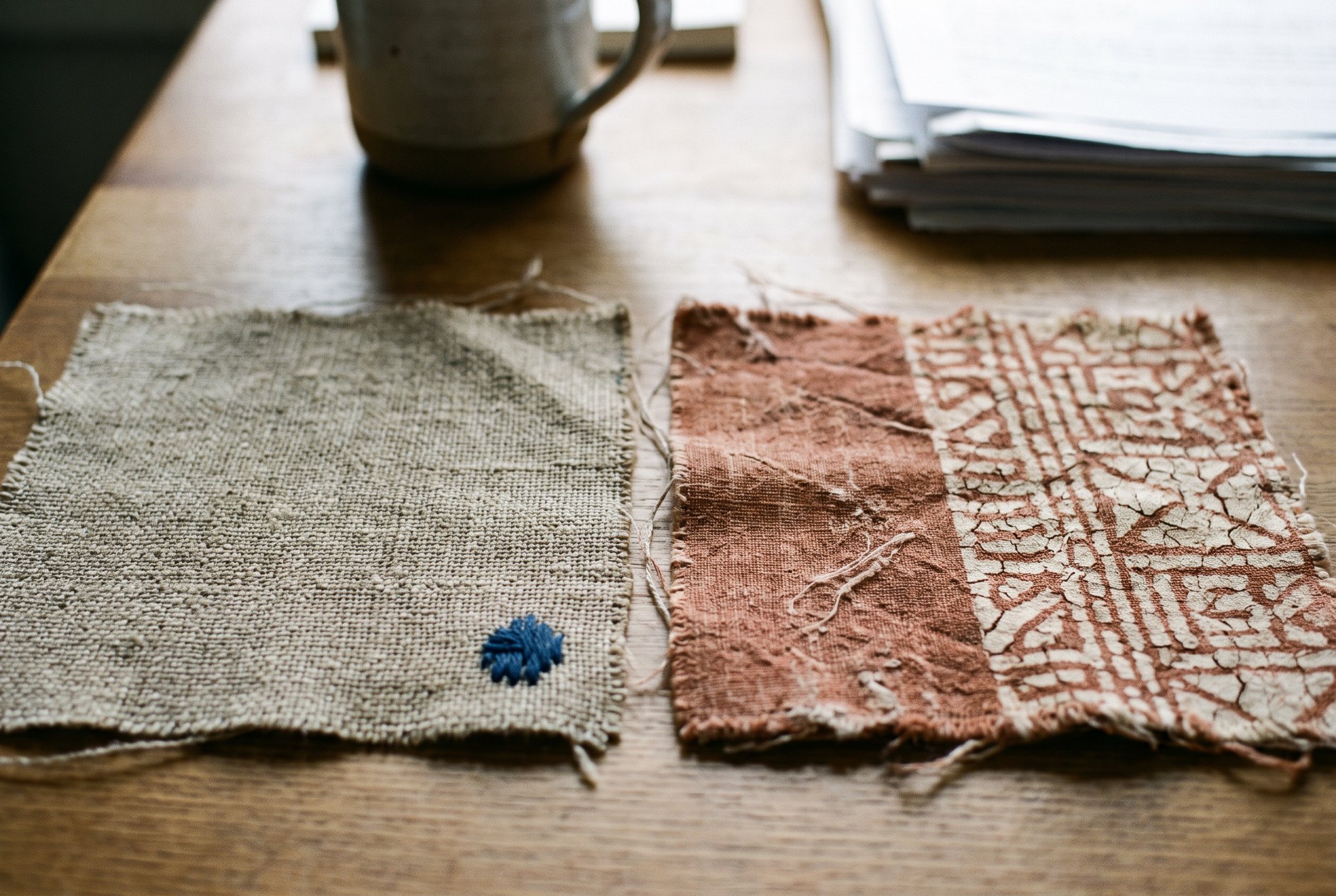
Embroidery vs print: the short answer
In the embroidery vs print question, embroidery usually holds its shape and texture longer on everyday clothes, because thread is stitched into the fabric. Print usually stays sharper for large, detailed artwork and feels lighter, but it can fade or crack if it is washed hot and dried hard. Both age well when they are cared for. Neither is a promise, so look at the fabric underneath too.
This embroidery vs print comparison is general knowledge about how the two techniques behave, not a lab test. Results vary with the thread, the ink, the base cloth and how you wash. Below is what to expect from each, and how to choose between them for the clothes you actually wear.

What embroidery is, and how it ages
Embroidery means a design made of thread, stitched through the cloth. You can feel it: it has a raised, slightly textured surface. Because the design is part of the fabric rather than a layer sitting on it, it does not peel or crack in the way a surface layer can.
Over time, embroidery tends to change in three gentle ways.
- The thread softens. A new stitch is crisp. After many washes it relaxes, which many people like.
- The colour may dull a little. Sun and repeated washing can lift thread colour slowly. Darker garments make this less visible.
- Edges can fuzz. If a thread catches on a zip, a bag strap or Velcro, it can pull. This is the main risk, and it is easy to avoid.
Embroidery also depends on the garment. A dense design on a thin, stretchy fabric can pucker. A small, simple design on a firm knit sits flat and stays that way. That is why small marks, such as a chest logo, suit embroidery better than large artwork.
Where you see embroidery at EKVAAR
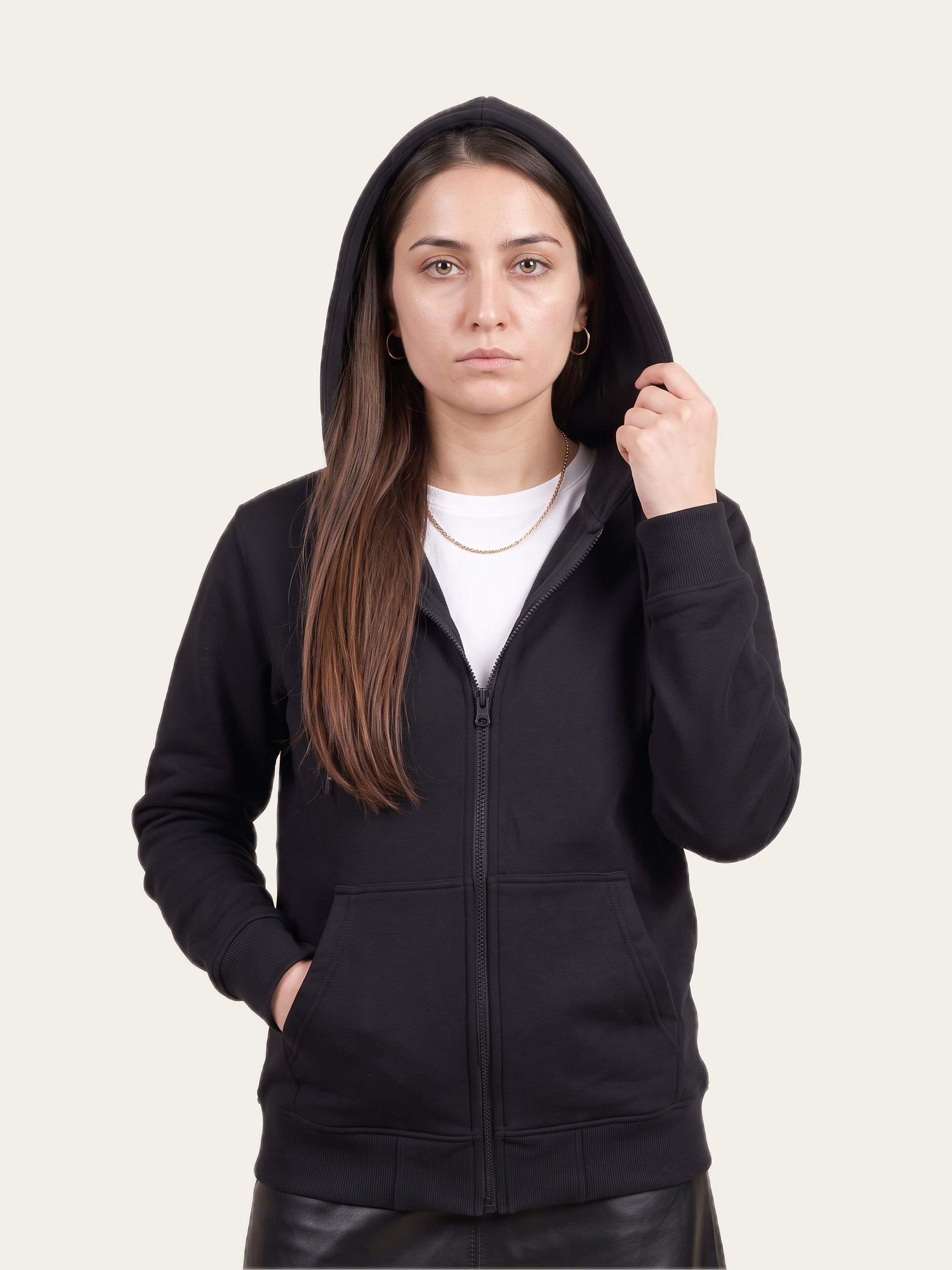
Several pieces are described with embroidered marks. The SIGNAL Zip Hoodie (₹1,799, in Noor Black and Rui White) has EKVAAR spelled in Morse code on the left chest, with the first dot in Agni Red. The NAKED Dot Oversized Tee (₹799, in Noor Black and Rui White) is an oversized tee in 220–240 GSM cotton finished with a single embroidered dot. The Signature Cap (₹599, Rui White) is a structured cotton drill cap with the emblem embroidered at the front.
Each of these keeps the mark small and simple, which is where embroidery tends to do its best work in the embroidery vs print comparison.
What print is, and how it ages
Print means colour applied to the surface of the fabric, or dyed into it, depending on the method. It can carry fine lines, gradients and full-coverage artwork that thread could not follow. It also adds almost no weight, so a big graphic does not make the garment feel stiff.
How a print ages depends heavily on the method, the ink and the cloth. In general:
- Fading is the most common change, usually from hot water, strong detergent and direct sun.
- Cracking can appear on thick, heavy prints that sit as a layer on top, especially when the garment is stretched or dried at high heat.
- Feel varies. Some prints are almost invisible to the touch. Others feel slightly rubbery.
Good news: the biggest cause of early print wear is not the print itself. It is a hot tumble dryer. Wash inside out, cool, and let it dry in shade, and most prints last well beyond what people expect. Our guide to washing a hoodie covers the steps.
Embroidery vs print, side by side
| Embroidery | ||
|---|---|---|
| Feel | Raised, textured | Flat, or lightly coated |
| Best for | Small logos, single marks, simple shapes | Large artwork, fine detail, all-over patterns |
| Typical ageing | Softens, may dull slowly, can snag | May fade or crack with heat and harsh washing |
| Weight on cloth | Adds a little density | Adds almost none |
| Biggest enemy | Snags and rough zips | Hot dryers and harsh detergent |
Read that embroidery vs print table as a guide, not a rule. A dense print on a soft tee and a sparse stitch on a firm hoodie will each behave differently.
A word on the fabric underneath
In any embroidery vs print debate, it is easy to blame the decoration when a garment looks tired, but the cloth usually tells the story first. A tee that has lost its shape, a hoodie that has started to pill, a neckline that has gone wavy: none of that is about thread or ink. Heavier, denser fabric holds both embroidery and print more steadily, because there is less stretching and rubbing at the surface. If you are weighing embroidery vs print on two pieces, compare the GSM and the fibre before you compare the logo.
Where print makes more sense
In embroidery vs print terms, large or all-over designs are where print earns its place. The Monogram Oversized Hoodie (₹1,799, Rui White and Gulabi Pink) carries the vertical EKVAAR monogram in black print on an ultra-heavy hoodie. The Original Stole (₹499, Noor Black) is a 20 × 70 inch lightweight satin stole printed with the monogram over a black-to-grey gradient. A gradient like that would be very hard to stitch, and a stole needs to stay light and drape well.
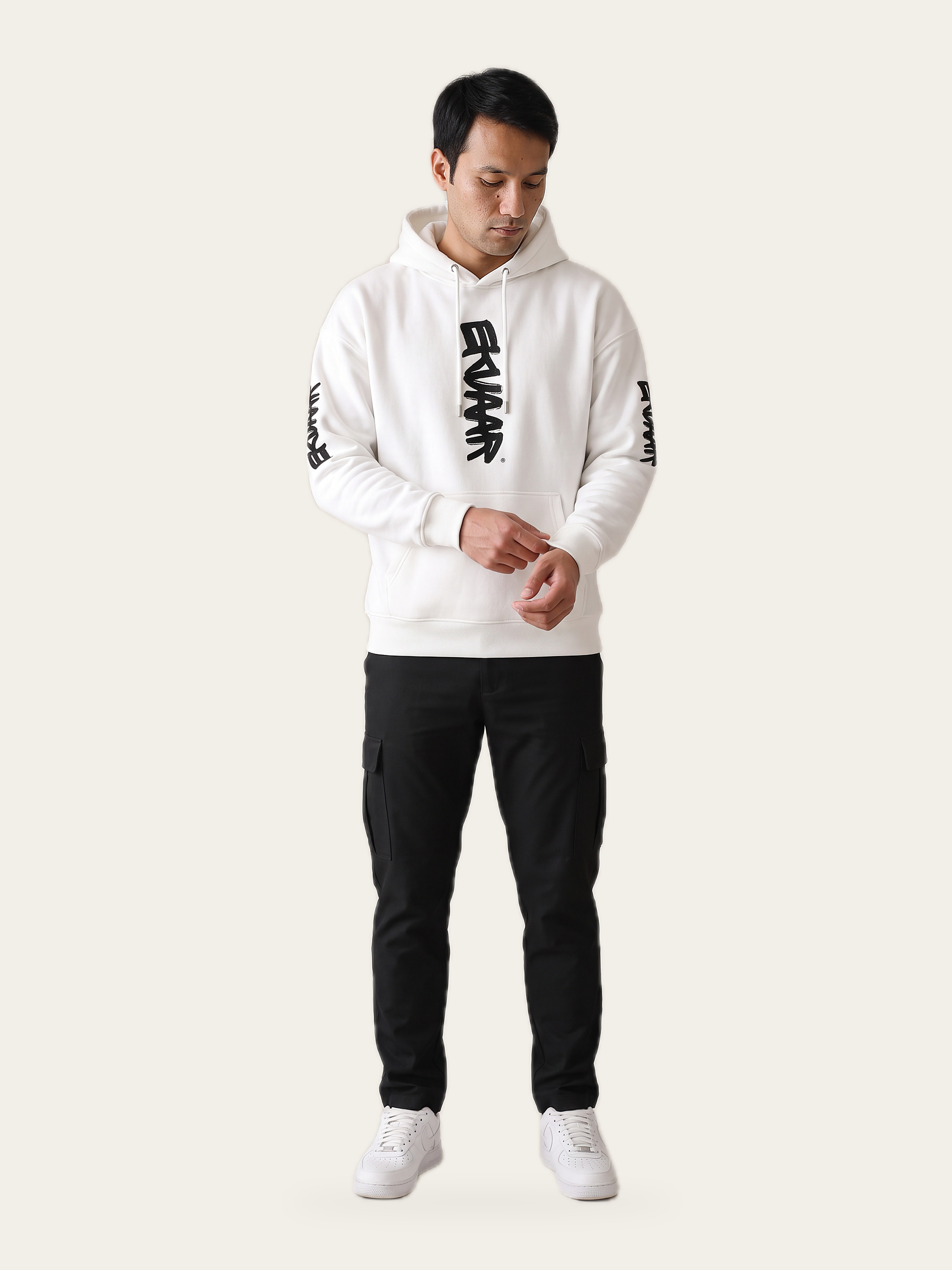
So the embroidery vs print choice is often practical. A small mark on a chest? Thread. A gradient across a long, light stole? Print.
Embroidery vs print: how to choose for your own wardrobe
- Look at the size of the mark. Small and simple points to embroidery. Large or detailed points to print.
- Look at the fabric. Firm knits like fleece and cotton drill carry embroidery well. Very light or very stretchy cloth suits print better.
- Think about how you wash. If you often use a hot cycle and a dryer, neither technique will love you. Change the wash first.
- Think about texture. Some people enjoy a raised stitch. Some prefer a flat surface against the skin.
- Check the base garment. A good GSM and a good cotton matter more than the decoration. For weight, see our note on hoodie GSM.
Care that helps both
- Turn the garment inside out before washing.
- Use cool or lukewarm water and a mild detergent.
- Avoid bleach and fabric softener on decorated areas.
- Dry in shade, flat or on a hanger, not in a hot dryer.
- If you iron, press from the inside, over a soft cloth, and never on the stitching or print directly.
- Close zips before washing so they do not snag thread.
These steps take a minute and add noticeably to how long a decorated piece looks good.
Embroidery vs print: which one should you pick
If you want a quiet, low-key piece that improves with wear, look for a small embroidered mark on a solid base. If you want artwork, colour and graphics, print is the natural fit. Most people settle embroidery vs print by owning both, and that is fine. What separates a garment that lasts from one that does not is mostly the cloth, the cut and the care.
FAQs
Does embroidery last longer than print?
Often it holds its look longer on a garment that is worn and washed a lot, because the thread sits in the fabric rather than on it. It depends on the thread, the stitch density and how you wash, so treat it as a tendency, not a guarantee.
Does a print always crack?
No. A well-applied print on a good fabric can stay clean for a long time. Cracking and fading tend to come from high heat, harsh detergent and rough drying, whatever the method.
How should I wash embroidered clothes?
Turn the garment inside out, wash cool on a gentle cycle and dry in shade. Skip the iron directly on the stitching, or press from the inside over a soft cloth.
Embroidery vs print: which is better for a small logo?
Embroidery suits small, simple marks like a chest logo or a single dot. Print suits large or detailed artwork that would need too many stitches.
Whichever side of embroidery vs print you land on, browse the full EKVAAR range.


