Measure the child, not the birthday
Age labels on kids clothes are a guess. Two children born in the same month can be a hand span apart in height, and one may be slim while the other is sturdy. To choose kids clothes with confidence, measure your child at home and compare the numbers with the Size guide on the product page. It takes five minutes and needs only a soft tape.
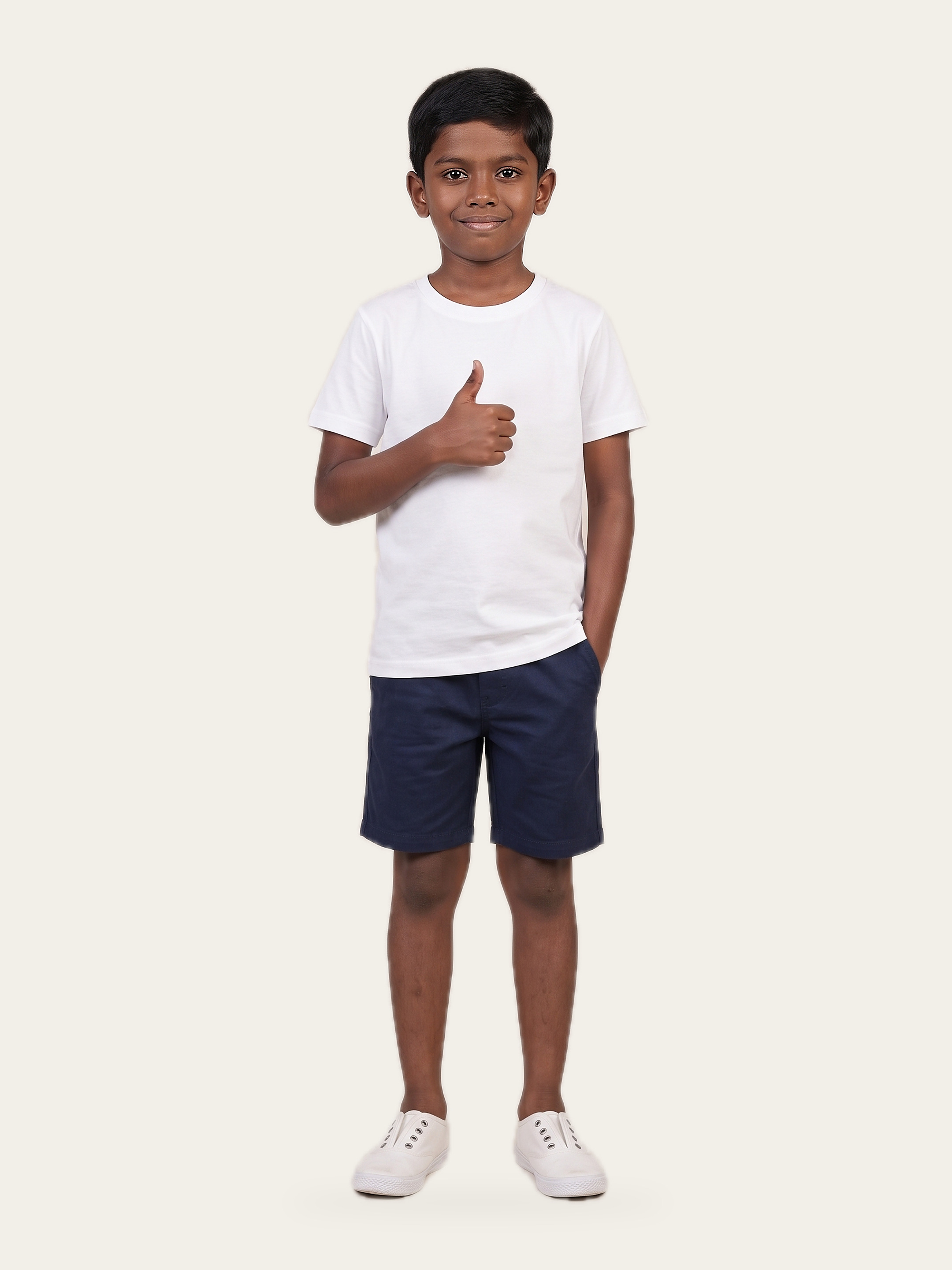
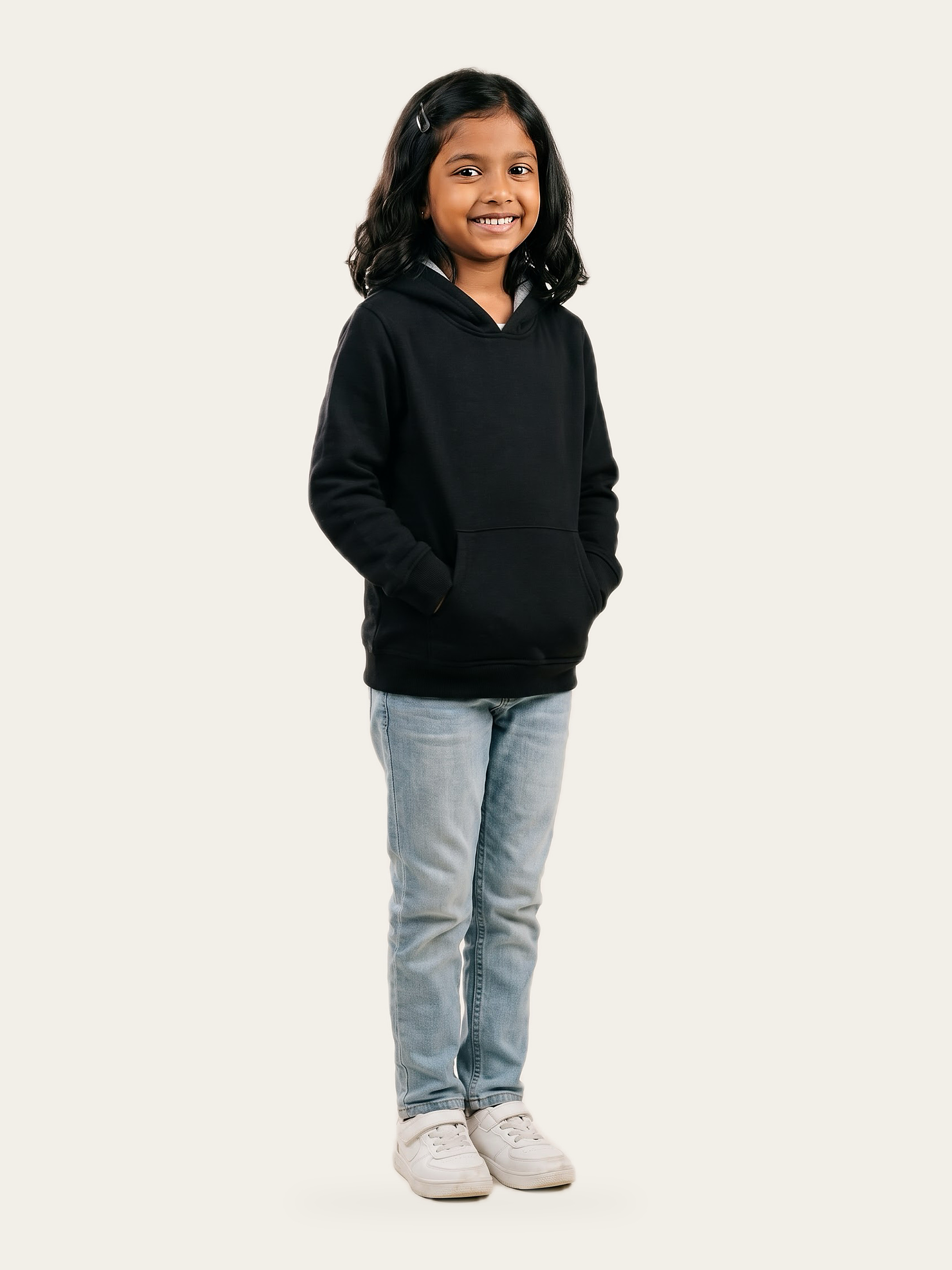
The rest of this post shows how to size kids clothes, and how to decide when a measurement sits between two sizes. We use our MINI Crew Tee (Boys), MINI Crew Tee (Girls) and MINI Hoodie as examples, because these are the pieces parents ask about most.
What you need
- A soft measuring tape. If you only have a hard ruler, use a piece of string and then hold it against the ruler.
- A pen and paper, or your phone notes.
- Thin clothes on your child, such as a vest and shorts.
- Five relaxed minutes. Turn it into a game, since wriggling ruins a measurement.
The five measurements for kids clothes
1. Height
Have your child stand barefoot against a wall with heels touching it and eyes looking straight ahead. Lay a book flat on the top of the head and mark the wall. Measure from floor to mark.
2. Chest
Wrap the tape around the fullest part of the chest, just under the armpits and across the shoulder blades. Keep it level and snug, not tight. You should be able to slip one finger under it.
3. Waist
Measure around the natural waist, which is the narrowest part of the middle. This matters most for pants and skirts.
4. Shoulder to hem length
Measure from the top of the shoulder, next to the neck, down to where you want a tee to end, usually around the hip. This tells you if a top will look long or short on your child.
5. Arm length
Measure from the shoulder point to the wrist with the arm relaxed. It is the number that matters for the sleeves of a hoodie.
How to compare with the Size guide
For kids clothes, every product page has a Size guide link beside the size options, with that piece’s own measurements. Open it and compare your numbers. Start with chest, because a tee or hoodie that is tight across the chest is the one children refuse to wear. Then check length.
The MINI Crew Tee (Boys) and the MINI Crew Tee (Girls) are the CORE crew tee, sized down: soft cotton made for play, school and everything in between. The MINI Hoodie is a warm, soft cotton-blend pullover with a lined hood, a kangaroo pocket and ribbed cuffs. Each has its own measurements, so do not assume that a size on one matches another.
When your child is between sizes
This happens all the time with kids clothes. Here is a simple way to decide.
| Situation | Usual choice |
|---|---|
| Chest sits between two sizes, growing fast | The larger size |
| Hoodie for winter, layered over a tee | The larger size, so a tee fits underneath |
| Tee for sports or play where sleeves may catch | The size that fits the chest closely without pulling |
| Child is tall but slim | Follow length first, then check the chest |
These are general guidelines for kids clothes, not rules. Your child’s comfort matters more. If they say a tee feels tight under the arms, the size is too small no matter what the number says.
Kids clothes sizes are not the same across brands
If you have kept a favourite tee from another brand, lay it flat, measure it across the chest and along the length, and compare with our Size guide. That gives you a real reference point, which beats trusting a label that says 6 to 7 years.
Keep a small measurement card
Once you have the numbers, save them in a note on your phone with the date. Add the size you chose and how it fit. After two or three orders you will know your child’s pattern: perhaps the chest runs slim but the length runs long. Sharing the card with a grandparent or aunt who is buying kids clothes as a gift also removes the guessing. If you shop for other people’s children, our post on choosing a gift size without asking has more ideas.
What we tell parents
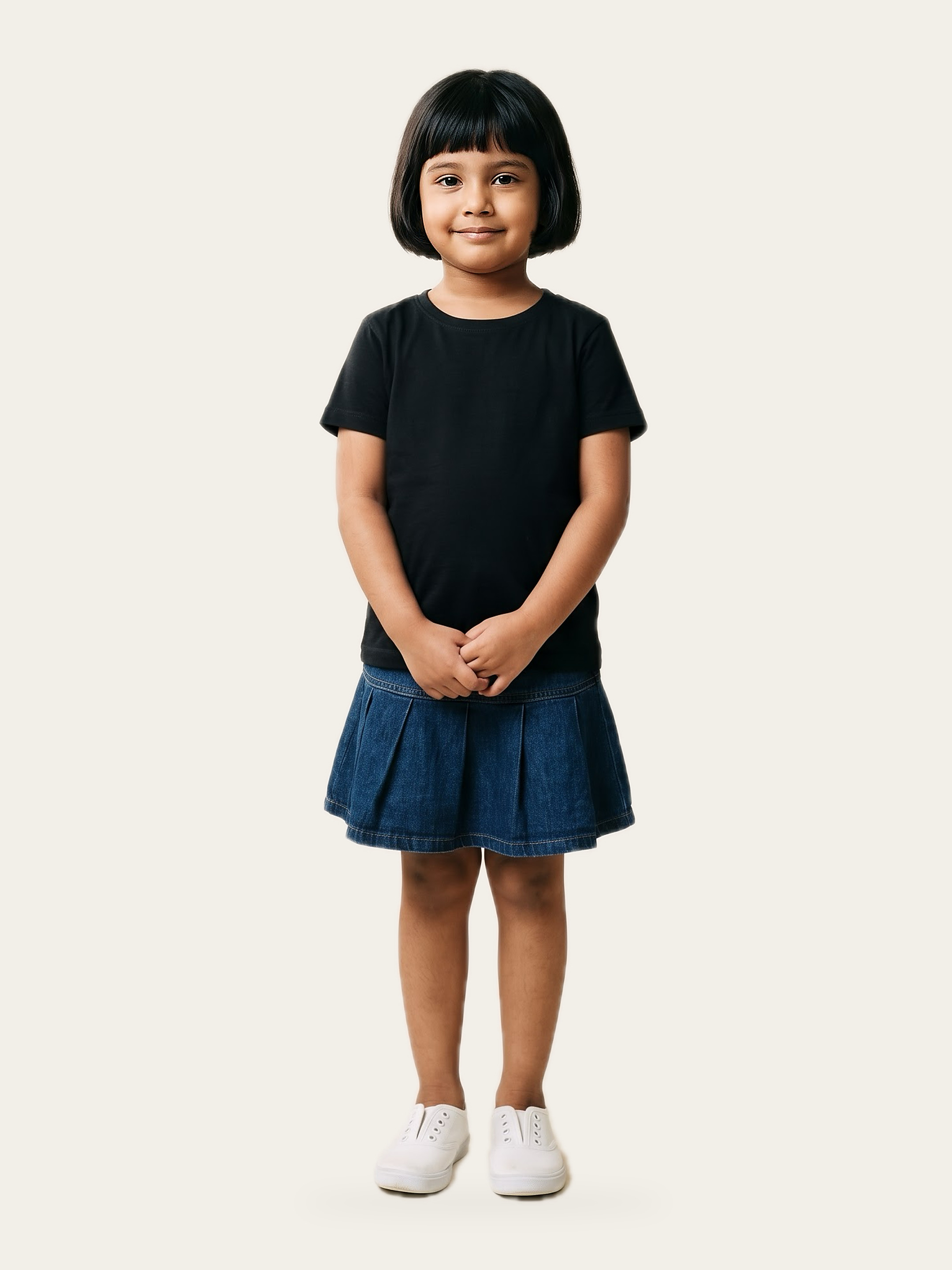
The MINI Crew Tee (Boys) and MINI Crew Tee (Girls) come in soft cotton meant for school and play, so the real test is whether your child can run, sit and reach without pulling at the cloth. The MINI Hoodie is for cooler days and gets the same test with a tee underneath. If it passes, it fits, and that is the only test kids clothes really need.
Every piece is made in India for you once you reserve it, and shipping is free across India.
A five-minute routine for busy parents
If measuring for kids clothes feels like one more task, fold it into something you already do. Do it on the first of the month, after bath time or on a Sunday morning. Take the height, chest and length in one go and tell your child it is a growth check. Many children like seeing the numbers go up, and some keep a height chart on the wall. After a few months you will see how fast your child grows, and you will know when a piece will need replacing before it turns tight.
When you are choosing a hoodie, remember that it sits over other clothes. Measure your child in a tee, and remember the hoodie will go over that. A little extra room across the chest and arms makes the hoodie easier to pull on and off, especially for younger children who dress themselves. The lined hood and ribbed cuffs on the MINI Hoodie also sit best when the body has some ease.
Common mistakes to avoid
Most sizing problems with kids clothes come from a few habits.
- Measuring over thick clothes. A jumper adds more than you think. Measure over a vest or a thin tee.
- Pulling the tape tight. A snug tape gives a smaller number than the child actually needs to move comfortably.
- Trusting one measurement. Height alone misses build. Always check chest as well.
- Buying far too big. One size up is a sensible allowance. Two sizes up looks droopy and makes sleeves and hems a nuisance, especially on a hoodie.
- Ignoring the child. If your child says something feels itchy or tight, believe them. Children notice comfort long before adults do.
Sizing kids clothes for different ages
Toddlers
Growth is quick, and toddlers wriggle, so measurement is best done while they are calm or asleep. Focus on chest and length. Comfort at the neck matters most, since toddlers dislike anything tight there.
School-age children
Children in this range are active all day. Check that a tee lets them lift their arms without the hem rising, and that a hoodie sleeve does not cover their hands while they write or play.
Pre-teens
Children this age often care about fit more than parents expect. Ask them to try the piece on the numbers and involve them in the choice. A child who feels comfortable in their clothes wears them more, and that is the best use of money.
FAQs
Why is age a poor guide to kids clothes sizes?
Children of the same age can differ a lot in height and build. A measurement of the actual child tells you far more than the number on a label.
Which measurements should I take?
Take height, chest, and the length from shoulder to where you want the tee to end. Write them down with the date so you can compare later.
Should I size up for growing room?
If your child is between two sizes, many parents choose the larger one for a tee or hoodie, especially for relaxed wear. Check the Size guide on the product page for that piece’s measurements.
How often should I re-measure?
Every two or three months is a good habit for growing children, and again before each new order of kids clothes.
When you are ready, see the full range in the shop and reserve kids clothes that suit your child.