
Three checks, all done by hand
You can spot a well-made tee in your hands in under a minute. Check the collar for how it holds its shape, the seams for straight, even stitching, and the hem for a flat, level finish. Add a quick feel and stretch test on the fabric, and you will know more than the price tag or label can tell you.
This is a guide for anyone standing in front of a rack, or opening a parcel at home, who wants to know what a well-made tee actually looks like. You do not need tools or knowledge of tailoring. You need your eyes and your hands, and about a minute per tee.
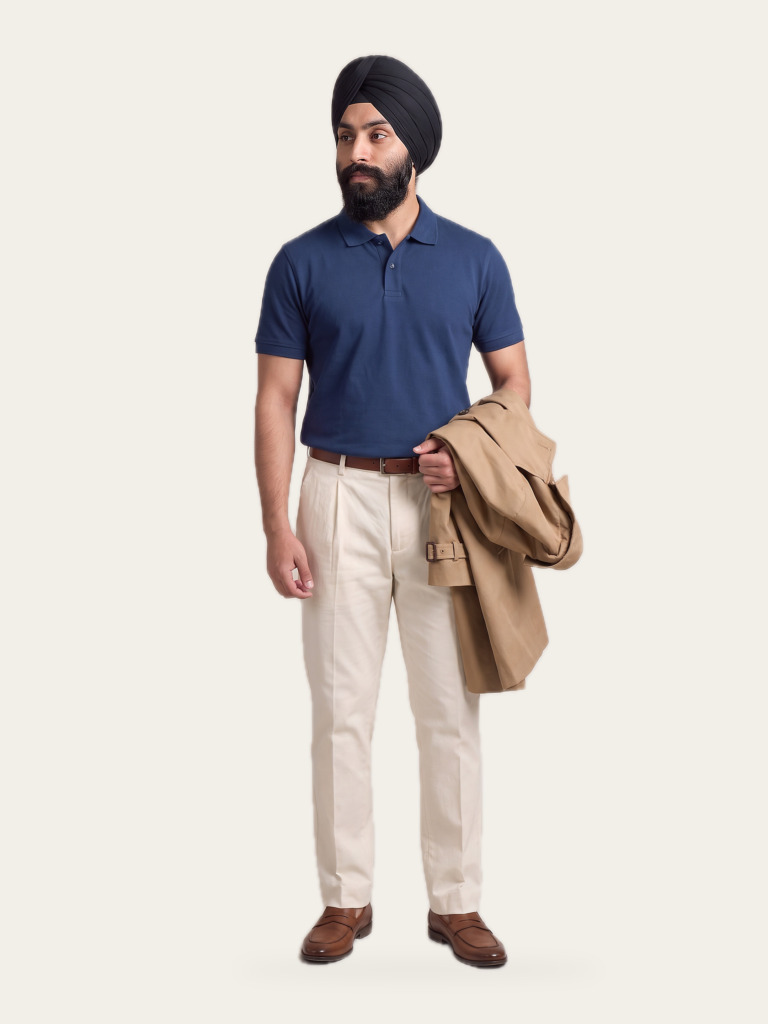
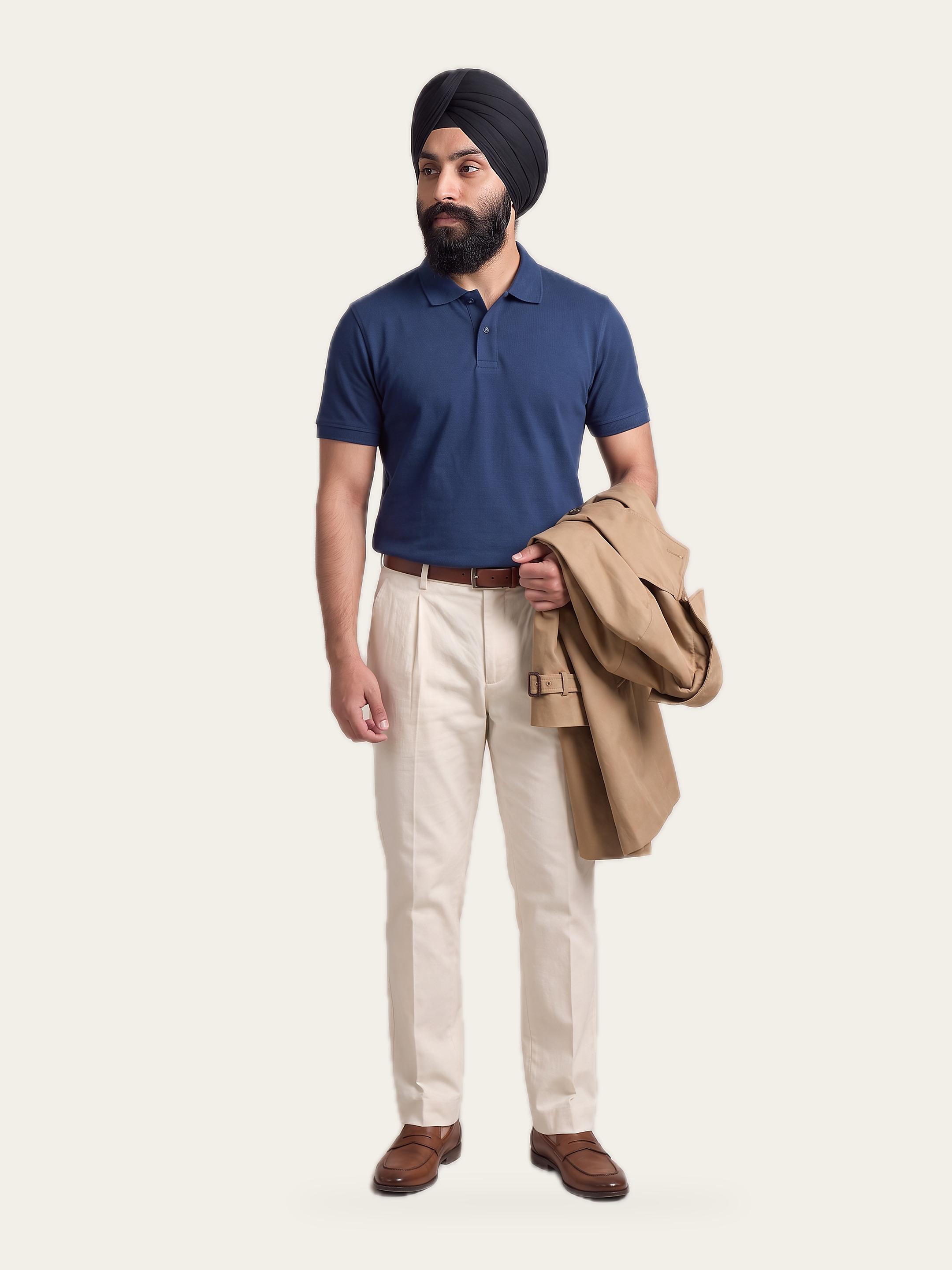
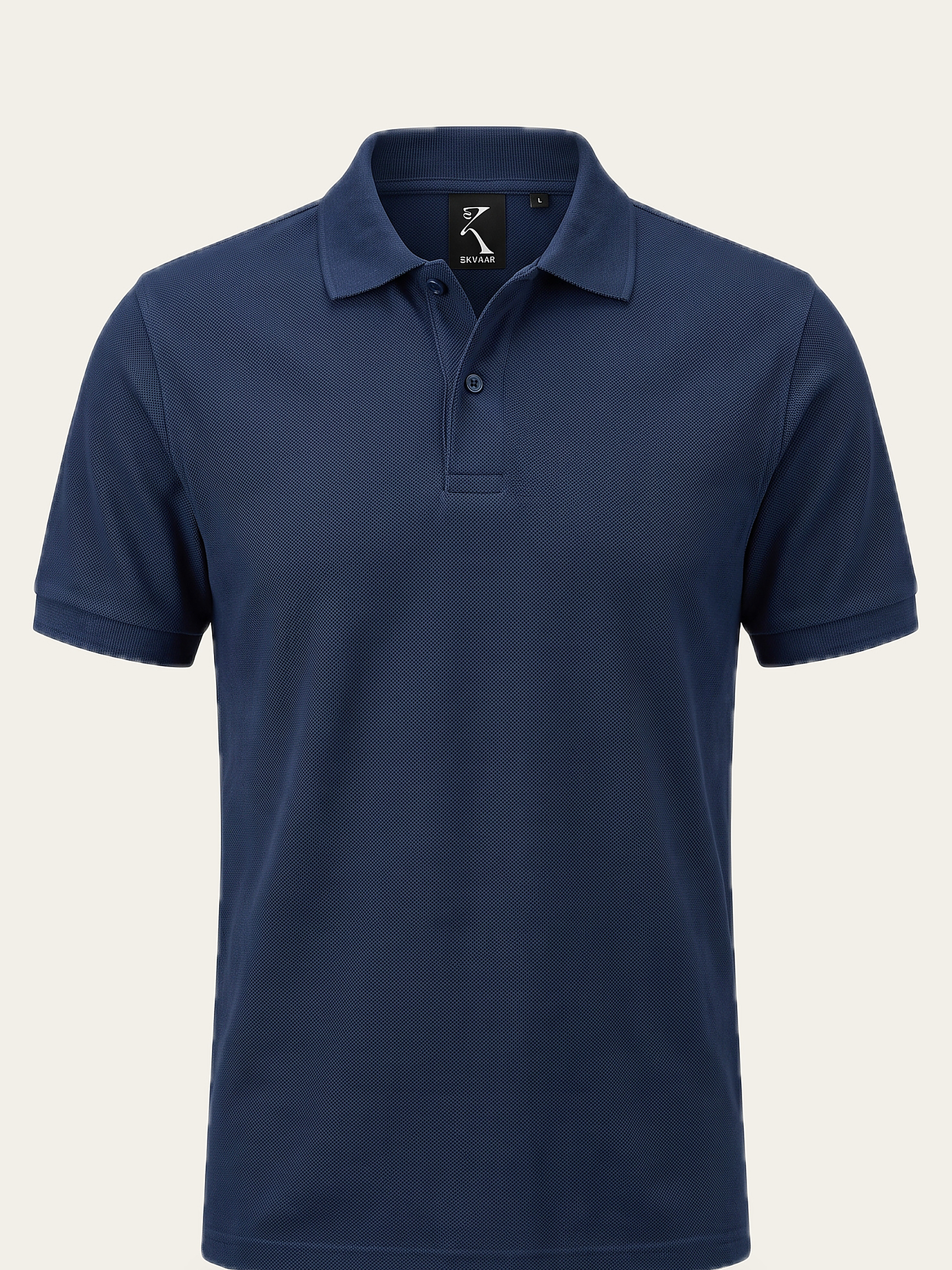
We use two EKVAAR pieces as reference points: the CORE Crew Tee (₹749), a 180 GSM cotton crew tee in a unisex regular fit, and the CORE Piqué Polo (₹999), a 220 GSM cotton piqué polo with a structured ribbed collar and cuffs. Use the same checks on any tee, from any brand.
Inspection 1: the collar of a well-made tee
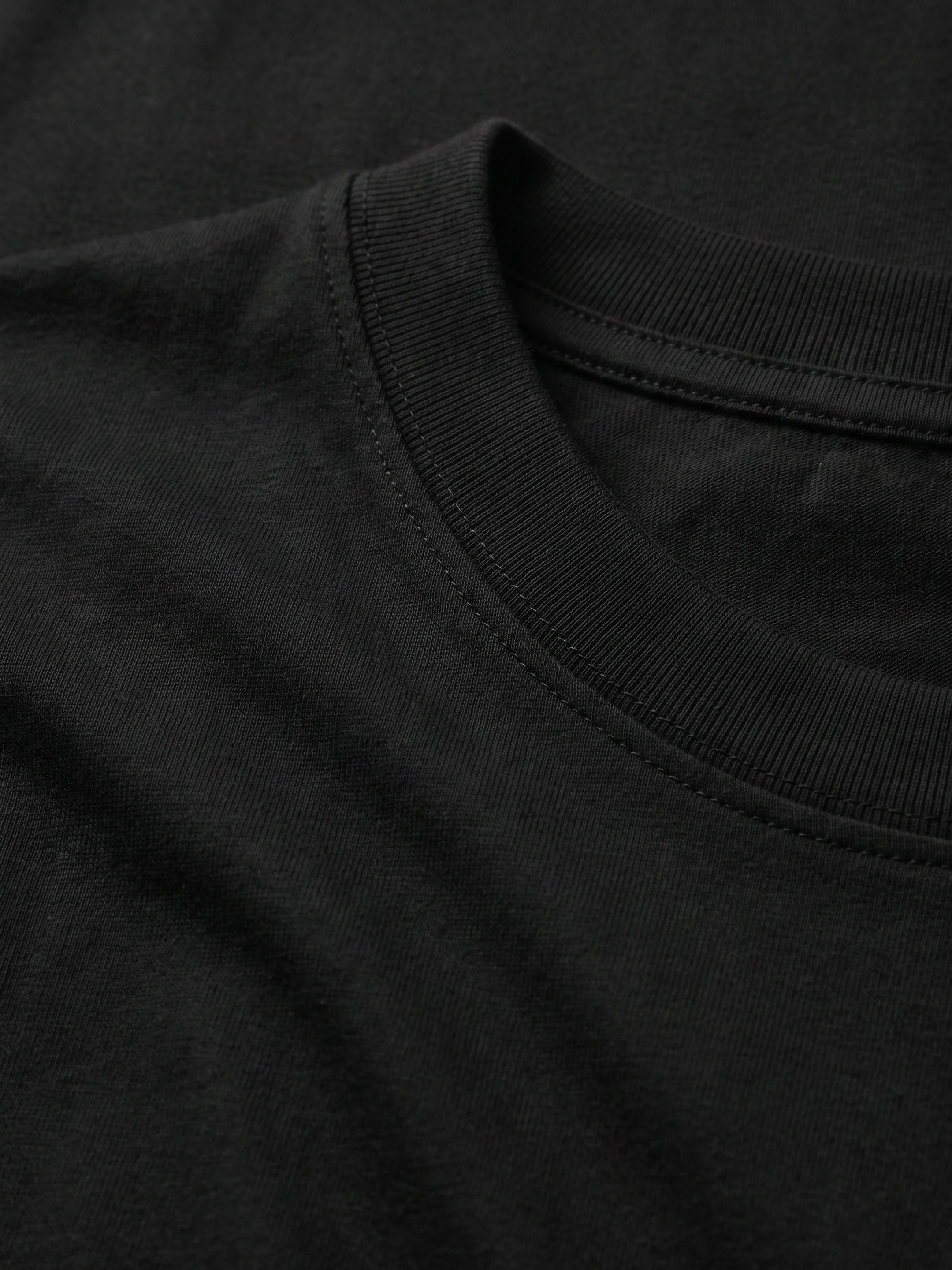
The collar is where a tee shows its age first, where a well-made tee proves itself, and where cheap tees give themselves away. It takes the most stretching of any part of the garment, every time you pull it over your head.
What to do
- Hold the tee up by the shoulders and look at the neckline. It should be a clean, even curve, without waves or a flat spot.
- Pull the collar gently outward with both hands, then let go. It should spring back to its shape.
- Look at the ribbing. A good rib is dense and springy, with the stitching running straight around.
- Turn the tee inside out and check the seam where the collar joins the body. It should be tidy and even.
What good looks like
The ribbed collar of a well-made tee lies flat on the shoulders without curling up or gaping. A polo collar should stand a little on its own, which is what “structured” means in the piqué polo’s description. If a collar feels thin and floppy in your hand, it will probably stretch out within a few washes.
Inspection 2: the seams of a well-made tee
Seams hold a tee together, and they show where time and care went. Look at three places: the shoulders, the sides and the sleeve joins.
What to do
- Follow the line. Run your eye along a seam. Stitches should run in a straight line, with even spacing. Wobbles, skipped stitches and loose threads are signs of rushed work, not of a well-made tee.
- Tug lightly. Hold the fabric on either side of a seam and pull gently apart. A good seam stays closed and does not show gaps.
- Check the side seams. Hold the tee up by the shoulders. The side seams should hang straight down without twisting toward the front or back. A twisting seam means the fabric was cut or joined off-grain, and the tee will twist after washing.
- Feel the inside. The inside seam should feel smooth, not scratchy. Rough seams rub at the neck and under the arms.
Shoulder seams
These carry the weight of the tee. On a regular fit tee like the CORE Crew Tee, the shoulder seam should sit on the edge of your shoulder. Some tees have a tape reinforcing the shoulder line, which stops it from stretching. You cannot always see this, but you can feel a firm line along the top of the shoulder.
Inspection 3: the hem
The hem is the bottom edge of the tee. On a well-made tee it looks simple, but it says a lot about the finish.
What to do
- Lay the tee flat on a table. The hem should be level from side to side, without one edge sitting lower.
- Look at the stitch line on the hem. It should be one clean, even line, with no puckering or waves.
- Hold the front and back hems together. They should meet at the same length.
- Pull the hem lightly. It should not flare out or curl upward.
A wavy hem often means the stitching pulled the fabric while sewing. This does not always affect wear, but combined with a poor collar or twisting seams, it shows a rushed job.
Bonus check: the fabric of a well-made tee
Once the three inspections are done, take a moment with the fabric itself. GSM stands for grams per square metre and tells you how heavy the cloth is. A higher GSM usually means a thicker, more durable tee, while lower is lighter and cooler. It is only a guide, because a well-knit 180 GSM cotton can outlast a loose 220 GSM one.
- Hold it to the light. If you can clearly see through it, the knit is thin. A little see-through is fine in lighter colours, but very sheer fabric will wear out faster.
- Stretch and release. Pull the fabric sideways, then let go. It should return to shape within a moment.
- Feel it against your neck. Cotton that feels soft in the shop stays soft. Cotton that feels harsh now will not improve.
For reference, the CORE Crew Tee is a 180 GSM cotton described as mid-weight and soft from the first wear. The CORE Piqué Polo, at 220 GSM, has a heavier, textured piqué knit. That texture is the honeycomb pattern of the knit, which gives the polo more body than a plain jersey tee. Our note on why tee prices differ explains how weight, knit and finish add up.
A one-minute well-made tee checklist
| Check | Pass | Warning sign |
|---|---|---|
| Collar shape | Even curve, springs back | Waves, flat spots, floppy rib |
| Collar join | Tidy, even inside | Loose threads, uneven stitching |
| Seams | Straight, even, hang straight | Wobbles, skipped stitches, twist |
| Inside seams | Smooth | Scratchy, rough |
| Hem | Level, flat, even stitch line | Waves, puckers, curling |
| Fabric | Even weight, returns after stretch | Sheer, thin, baggy after pulling |
What these checks cannot tell you
Hands cannot tell you how even a well-made tee behaves after ten washes, or how the colour holds. For that, look at how the maker describes the fabric and the fit. Product descriptions that give the actual GSM, fibre and fit, like the ones on the CORE Crew Tee and CORE Piqué Polo pages, tell you more than words such as “premium”. Each product page also has a Size guide link beside the size options, so you can check the piece’s own measurements before you decide.
Also remember that a well-made tee is one you will wear often. A tee that passes all three inspections costs less per wear, even when the price is higher at first. Our thinking on making fewer, longer-lasting things is in why we design fewer things, made to last.
Once you know what a well-made tee looks like, the checks take seconds. When you are ready for your own, look through the Solids at ekvaar.com/shop and reserve the tee or polo that suits you. Each piece is made for you once you reserve it, with free shipping across India.
FAQs
How can I tell if it is a well-made tee?
A well-made tee passes three checks: the collar, the seams and the hem. The collar should hold and spring back, the seams should be straight and even, and the hem should be level and flat. Then stretch the fabric and see whether it returns to shape.
Does a higher GSM always mean a better tee?
Not always. GSM tells you how heavy the fabric is, and higher usually means thicker and more durable. A well-knit lighter cotton can still outlast a loosely knit heavier one, so treat GSM as one clue among several.
What is the difference between the CORE Crew Tee and the CORE Piqué Polo?
The CORE Crew Tee is a 180 GSM cotton crew tee in a unisex regular fit. The CORE Piqué Polo is a 220 GSM cotton piqué polo with a structured ribbed collar and cuffs, so it has more body and a collar.
Why do tee side seams twist after washing?
Usually the fabric was cut or joined slightly off-grain, so it relaxes into a twist in the wash. You can spot early signs by holding the tee up by the shoulders and checking that the side seams hang straight.