
How do you pick an oversized size by height and weight?
Height and weight give you a starting point for an oversized fit, not the answer. For a true oversized look, many people take their usual size. For a roomy but tidier fit, size down. If you fall between two sizes, choose based on how you want the shoulders and length to sit. Always check the size guide on the product page, since every cut is different.
We are not going to print a magic chart here, because a number pulled from thin air would mislead you. Two people with the same height and weight can carry their weight very differently. What follows is a method for finding your oversized fit that works for any piece, from any brand.
What “oversized” really means
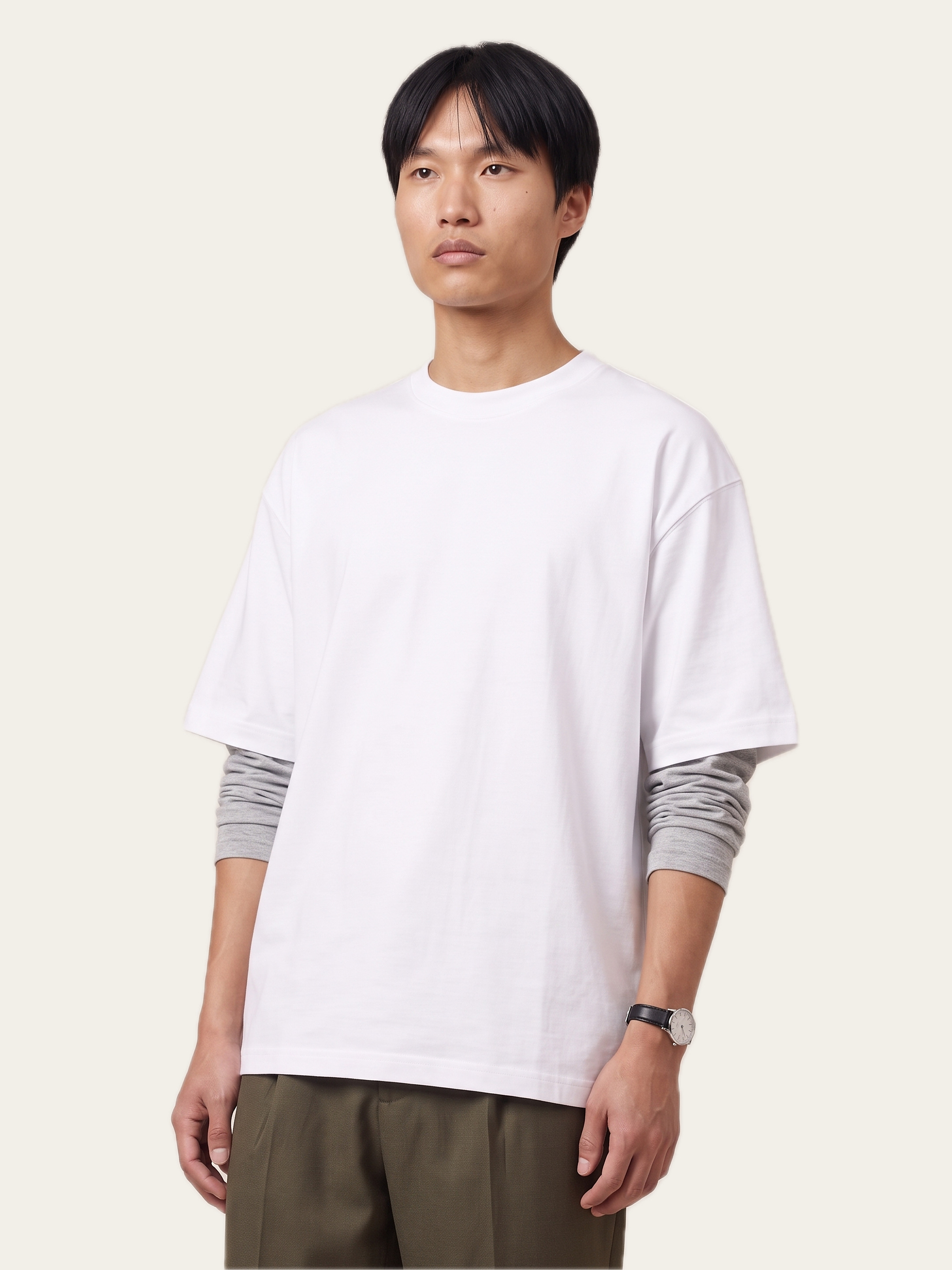
An oversized garment is cut larger than your body on purpose. Usually that means dropped shoulders (the seam sits down on your upper arm rather than at the shoulder point), a wider body, and often a longer hem. It should look relaxed, not like you borrowed someone else’s clothes.
That last part is the challenge. Go too big and the garment swallows you. Go too small and you lose the shape. The right oversized fit is the one where the drop looks intended.
Step 1: Decide the look you want
Before you look at any chart, decide which of these feels like you:
- Relaxed: a bit of extra room, still neat. Often your usual size.
- Properly oversized: a clear drop at the shoulder and a wide body. Often your usual size, sometimes one up if you like it very loose.
- Tidy oversized: loose, but close to your frame. Often one size down from where you would go for “properly oversized”.
The word “often” matters, because an oversized fit depends on the garment. That is why the next step matters most.
Step 2: Measure something you already own
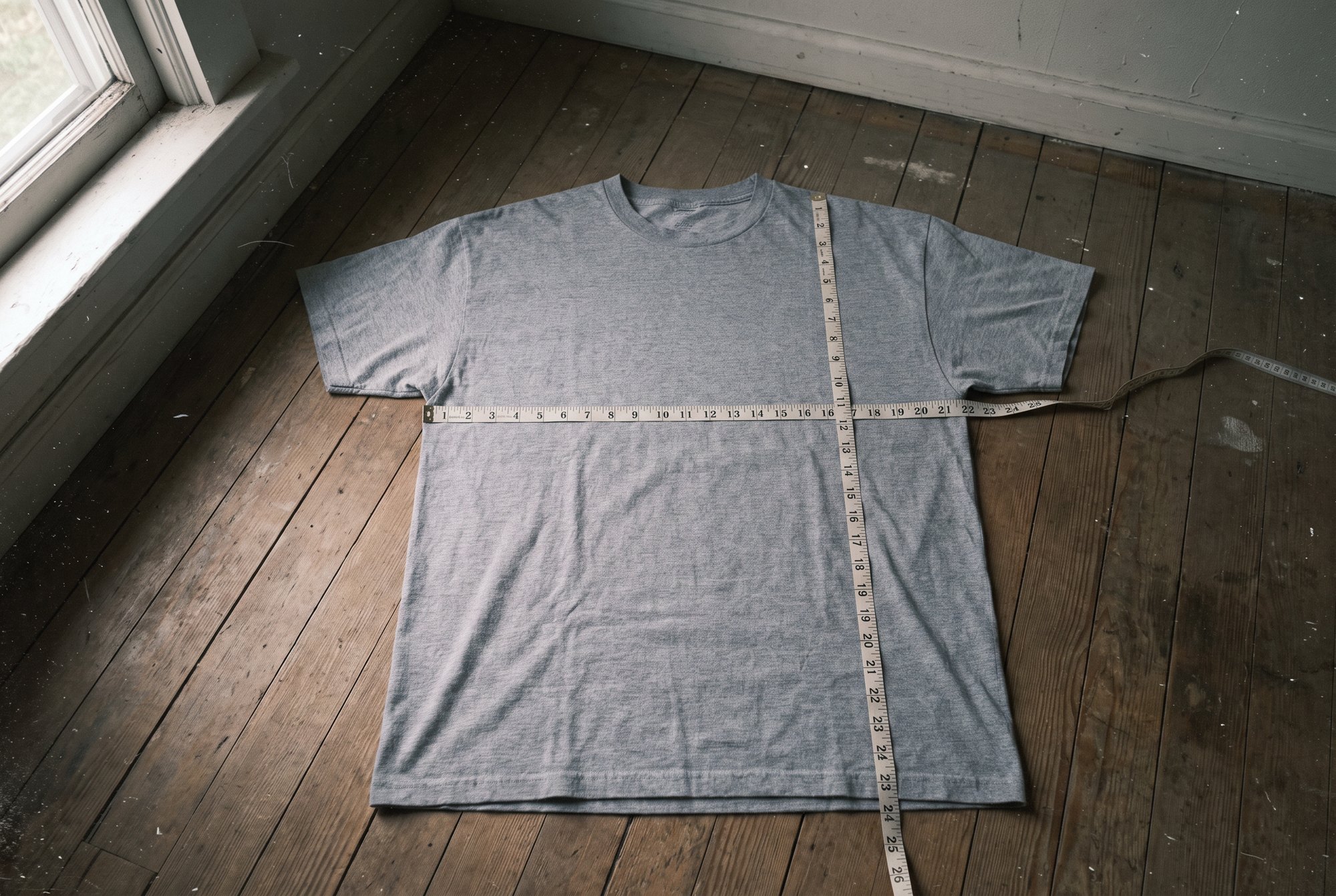
This is the most reliable trick, and it takes two minutes. Take a tee or hoodie whose fit you love, ideally one with an oversized fit. Lay it flat and measure:
- Chest: straight across, just under the armholes.
- Length: from the highest point of the shoulder to the bottom hem.
- Shoulder: seam to seam across the back.
Now compare those numbers with the size guide on the product page. Pick the size that comes closest to the piece you love. This beats any height and weight chart, because it uses your real preference.
Step 3: Use height and weight as a sanity check
Once you have your measurements, use height and weight to check the result.
Height mostly affects length and sleeve
If you are taller than average, length and sleeve are the areas to watch. A garment that looks perfectly cropped on someone shorter may look short on you. If you are shorter than average, check that the hem and sleeves of an oversized fit do not overwhelm you. Oversized sleeves can be rolled or pushed up, but a hem that hits too low cannot be fixed easily.
Weight and build affect the chest and waist
If you carry weight around your chest or stomach, a wide cut has plenty of room, but check the size guide for the body width of the size you are considering. If you have a slim build and go for your usual size in an oversized fit, the shoulders will drop more. That can look great, or too big, depending on taste.
Build matters more than the number on the scale
Broad shoulders, a narrow frame, a long torso: each changes how the same size sits. This is why measuring a piece you own tells you more than any number.
If you are between sizes
This happens to everyone. A few simple rules help:
- Prefer the larger size if you want the classic oversized drop or plan to layer over other clothes.
- Prefer the smaller size if you want a cleaner, more controlled oversized fit, or if you are shorter and worry about length.
- Think about washing. Cotton can shrink slightly if washed hot. Cold water reduces the risk. Our hoodie washing guide covers this.
- Think about the fabric. A heavy fabric hangs and drapes, and a lighter one can feel closer to the body.
Oversized fit by piece: what to keep in mind
Oversized tees
The FORM Oversized Tee is a heavyweight 240 GSM cotton tee cut oversized with dropped shoulders and extended length. Because the length is extended, it may sit lower on you than a regular tee. If you are shorter, check the length in the size guide. If you are taller, that extra length may be exactly what you want.
The LOOP Oversized Tee is a roomy, drop-shoulder tee in looped French terry. Terry has body and drapes, so it tends to look fuller than thin jersey.
Oversized hoodies and sweatshirts
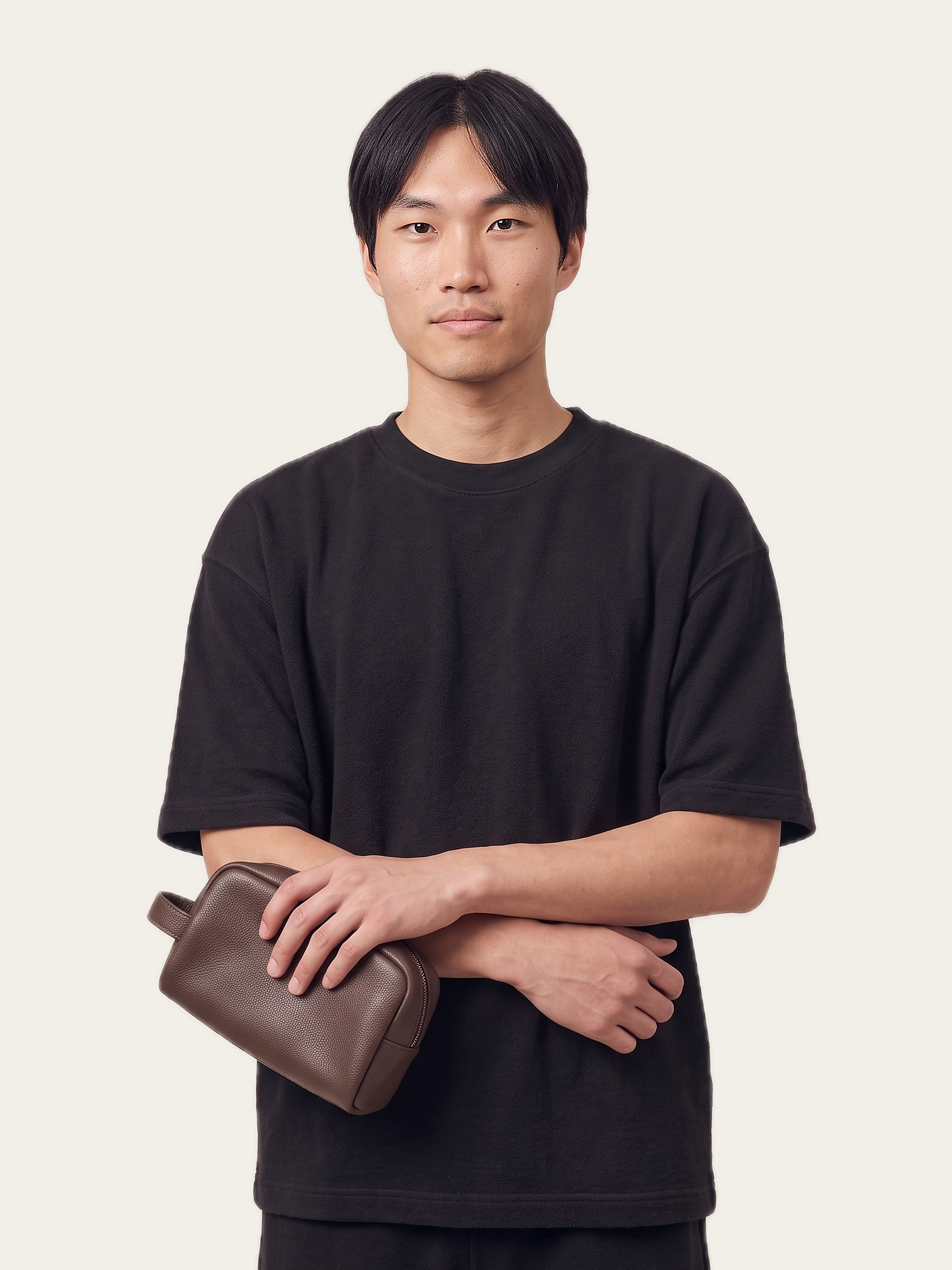
The ARCHIVE Oversized Hoodie is described as heavy and roomy with dropped shoulders, a double-layer hood and a kangaroo pocket. The FROST Oversized Sweatshirt is a heavyweight crew sweatshirt with dropped shoulders and a relaxed, boxy fit. Heavy fabric adds volume to an oversized fit, so if you want a tidier look, consider your usual size and check the chest width in the size guide.
Regular fit pieces
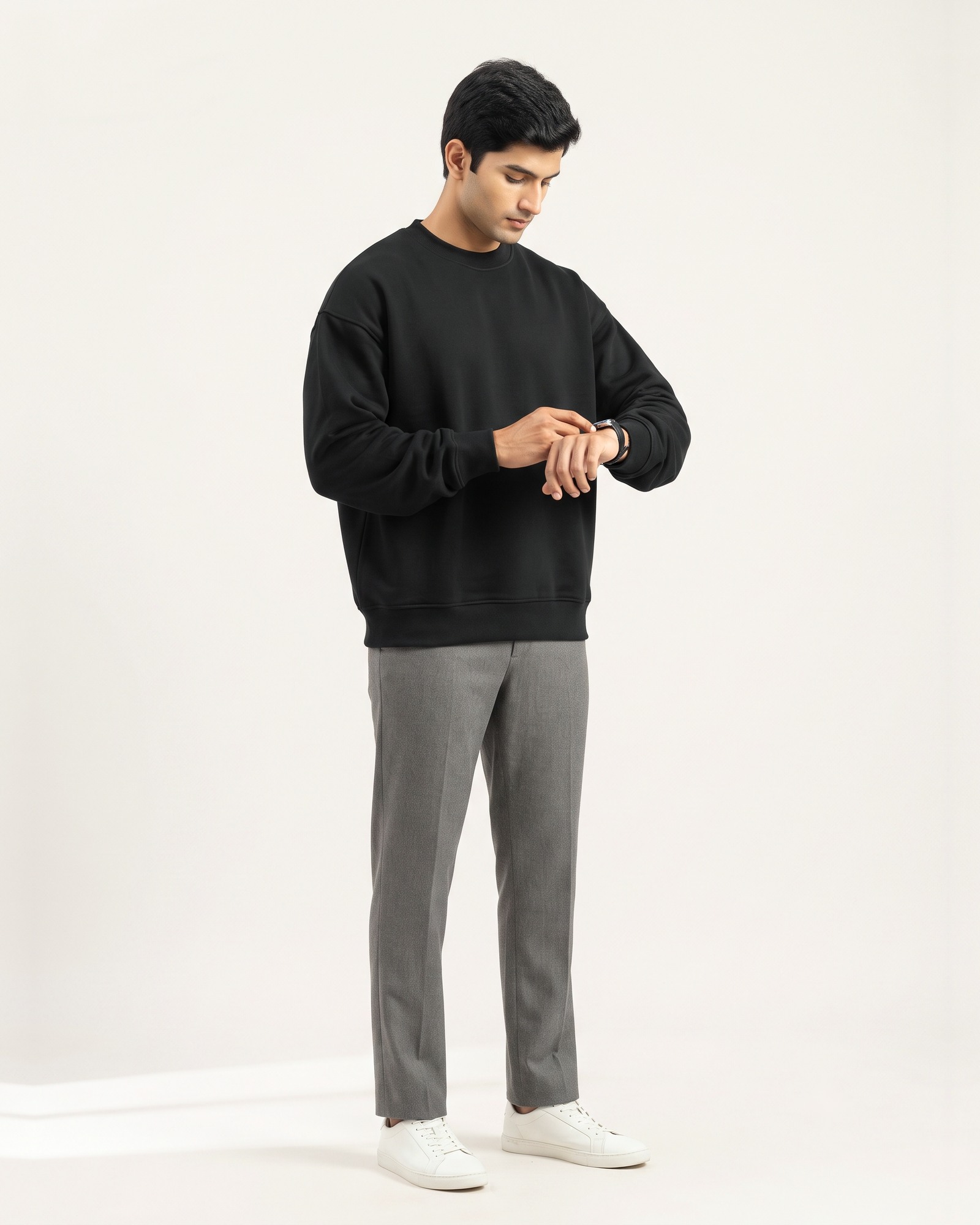
Not everything is oversized. Many of our Solids are cut in a regular fit, such as the CORE Crew Tee, described as a unisex regular fit. If you want a slightly looser feel, going up a size is one option. See our note on how a hoodie should fit for more on what different cuts do.
Common mistakes
- Sizing up twice. An oversized fit is already bigger. Sizing up again often gives sleeves down to your knuckles and a hem below your hips.
- Ignoring shoulder width. In an oversized fit the shoulder seam should sit down the arm, not at the neck.
- Trusting a chart from another brand. Every brand cuts differently, and there is no single standard for clothing sizes, so use the size guide for the piece you are buying.
- Forgetting the layers. If you will wear a hoodie over a tee, think about both.
A quick checklist
| Question | What it tells you |
|---|---|
| What fit do I want: relaxed, oversized or tidy? | Whether to go usual size, up or down |
| What are the chest, length and shoulder of a piece I love? | Your real numbers, compared with the size guide |
| Am I taller or shorter than average? | How the length and sleeves will land |
| Am I between sizes? | Choose by the look you want, larger for drop, smaller for control |
Ordering for someone else
If you are buying a gift, use the same method with a piece they already wear. If you cannot check, choose a relaxed cut, since an oversized fit forgives more than a fitted one. Reading each product page is worth it, as every cut carries its own size guide.
FAQs
Should I size up for an oversized fit?
Usually not. Oversized pieces are already cut larger, so many people take their usual size. Size up only if you want it very loose. Check the size guide on the product page first.
What if I am between two sizes?
Choose the larger size for a bigger drop or for layering, and the smaller for a tidier, more controlled look. Height and build can help you decide, especially for length.
Does height or weight matter more?
Neither is enough alone. Height mostly affects length and sleeves, while build affects chest and shoulders. Measuring a favourite piece you already own is the most reliable method.
Will an oversized tee shrink in the wash?
Cotton can shrink a little, especially in hot water and high heat. Washing cold and drying in shade lowers the risk. Always check the care label too.
Ready to find your size? Explore the shop.


