

How should a hoodie fit?
A good hoodie fit means shoulder seams that sit at or just past your shoulder point, a body with room to layer but no bunching, sleeves that end at the wrist or slightly over it, and a hem that lands around the hip. Ribbed cuffs and hem should hold gently without squeezing. The exact numbers change with the cut, so use these as checks, not rules.
Hoodie fit is where most people go wrong. The wrong fit makes an expensive hoodie look untidy, and the right fit makes a simple one look considered. Here is what to look at, in the order you should look at it.
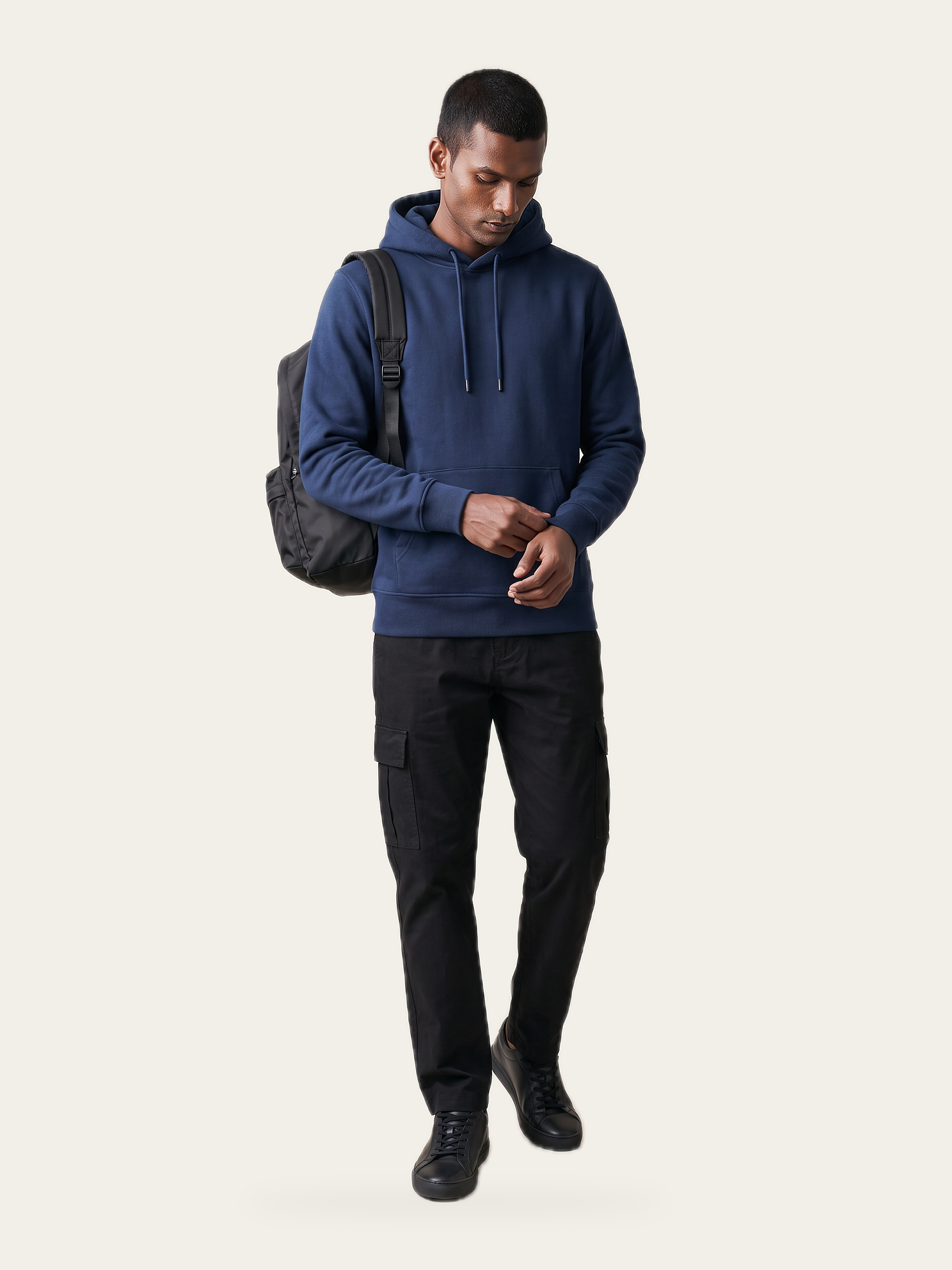
1. Shoulders: check this first
The shoulder seam tells you almost everything about hoodie fit. On a regular-fit hoodie, the seam should sit right at the edge of your shoulder, where your shoulder bone ends. If it sits up toward your neck, the hoodie is too small. If it hangs well down your upper arm, it is either too big or it is designed with dropped shoulders.
Dropped shoulders are a style, not a mistake. The ARCHIVE Oversized Hoodie is described with dropped shoulders, and the seam is meant to sit lower. On a regular cut, like the ORIGINAL Hoodie, which is listed as a unisex regular fit, you would expect a more traditional shoulder line.
The hoodie fit rule: know which cut you are buying, then judge the shoulder against that intention.
2. Body width: room without bulk
Pinch the fabric at your side. In a regular fit, you should be able to take up a small handful of fabric, not a fistful. There should be enough room to wear a tee underneath and move your arms, but the hoodie should not billow around your waist.
In an oversized cut, the body is wide on purpose. Here, the question is proportion: does it look wide because you chose it, or wide because it is the wrong size? A sign of a good oversized hoodie fit is that the width looks even from chest to hem, with fabric falling in a clean line instead of tenting out.

3. Length: where the hem lands
For a classic hoodie fit, the hem usually lands somewhere around your hip. A little longer looks relaxed, and a little shorter looks cropped. Both are fine when intended.
- Regular length: the hem sits around the hip. It works with most trousers, joggers and shorts.
- Longer length: covers more of the hips and can look great with slim bottoms. It can overwhelm a shorter frame.
- Cropped: ends at or above the waist. The ORIGINAL Cropped Hoodie is described as cropped to the waist, in heavy, soft fleece. It pairs best with high-waisted bottoms.
If you like the cropped shape but with an EKVAAR design detail, the SIGNAL Cropped Hoodie carries Morse code embroidery on the left chest and is cut cropped too.
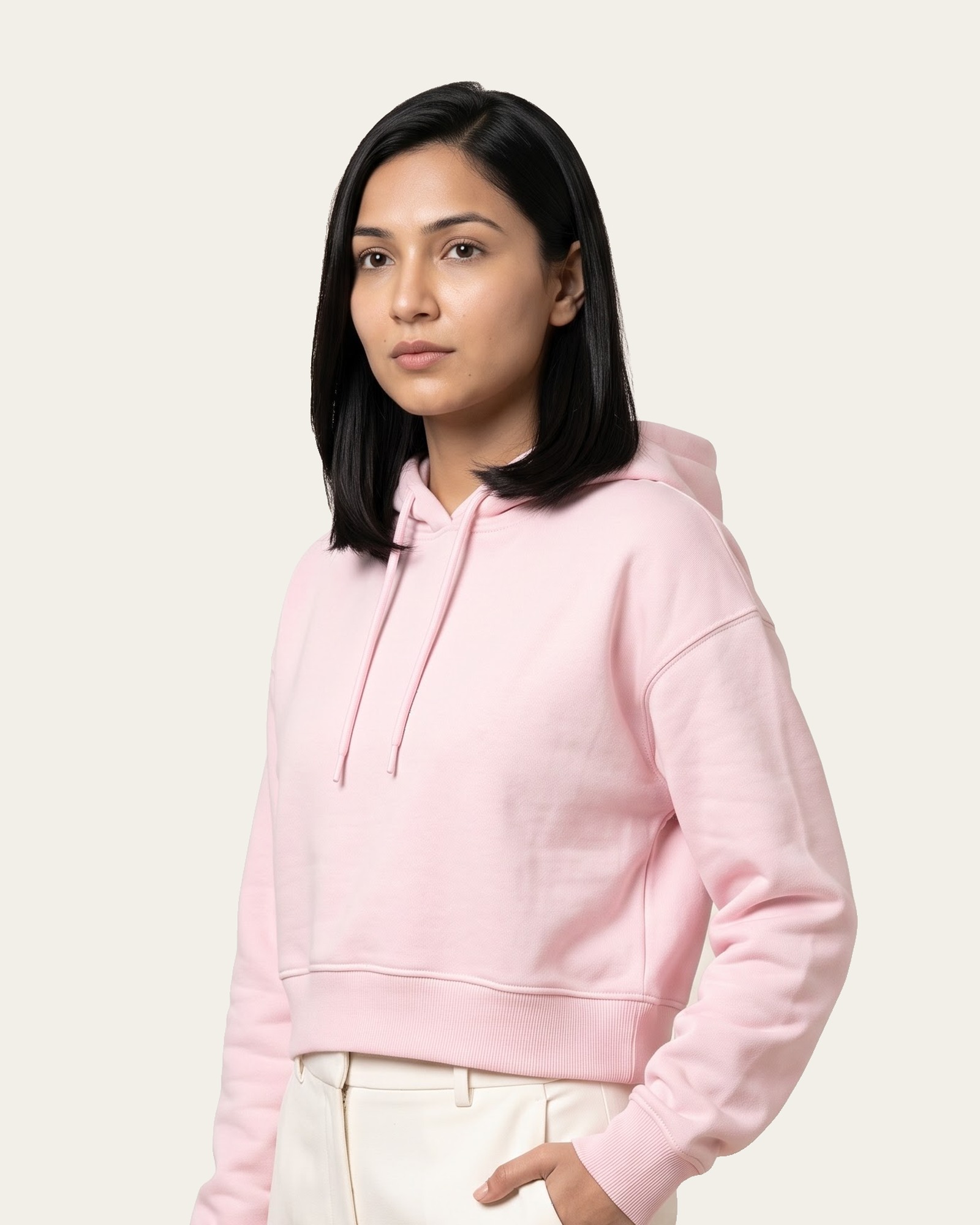
4. Sleeves: the wrist test
Stand with your arms relaxed at your sides. The cuff should end at your wrist bone or slightly below, so it covers the wrist but not your hand. With your arms raised, the sleeve should still stay near the wrist and not slide to the elbow.
On oversized hoodies, sleeves can be longer and cover part of the hand. Many people like that. If it bothers you, push the sleeves up. Ribbed cuffs make this easy because they hold in place around the forearm.
If the sleeve is short on a regular cut and rides up when you reach forward, the size is small for you, or the sleeve is short for your arm length.
5. Ribbing: the quiet detail
The ribbed cuffs and hem give a hoodie its shape. They should hold snugly, not tightly. Ribbing that squeezes leaves marks, and ribbing that is too loose lets the hoodie slide down. The ORIGINAL Zip Hoodie is described with ribbed cuffs and hem, and a 400 GSM brushed-fleece body in 90% cotton, so the weight and the ribbing work together to keep the structure.
Good ribbing also recovers after a wash if you care for it well. Our hoodie washing guide explains how to protect it.
6. The hood and pocket
A hood should sit comfortably when down, without pulling at the back of your neck. When up, it should cover your head without blocking your side view. A lined or double-layer hood keeps its shape better, which is why some hoodies include it in the description. The ORIGINAL Hoodie has a lined hood and a front pouch pocket, while the ARCHIVE has a double-layer hood and a kangaroo pocket.
The pocket should sit at a natural hand height. If your hands land at the top edge of the pocket, the hoodie might be short for your arms or torso.
Regular, oversized or cropped: which suits you?
| Cut | Look | Good for |
|---|---|---|
| Regular | Neat, easy, classic | Everyday wear, office casual, layering under jackets |
| Oversized | Relaxed, drop shoulder, roomy | Street looks, cold-weather layering, comfort-first days |
| Cropped | Short, modern, high-waist friendly | Pairing with high-waisted bottoms and longer layers |
If you are unsure how to choose a size for an oversized piece, our oversized fit guide shows how to measure a favourite garment and compare it with the size guide.
Fabric changes how a hoodie fit feels
Two hoodies in the same size can feel different because of the fabric. A heavier fleece stands away from the body and adds volume. A lighter terry hangs closer. If you are between sizes, take the weight into account when you judge hoodie fit. Our hoodie GSM guide explains why heavier fabrics feel bigger and warmer.
A five-minute hoodie fit check at home
- Put the hoodie on over the tee you would normally wear.
- Look at the shoulder seam in a mirror. Is it where the cut intends?
- Raise both arms. Does the hem rise past where you would like it?
- Reach forward and hug yourself. Do the sleeves ride up or pull across the back?
- Put the hood up and down. Does anything pull at your neck?
- Sit down. Does the fabric bunch at the stomach or feel tight at the arms?
If it passes those checks, the hoodie fit is right. If it fails on one point, look at whether another size fixes it, since every product page carries its own size guide.
What to remember after washing
Cotton can relax or shrink a little with washing, especially with heat. Washing cold and drying in shade helps it stay close to the hoodie fit you had on day one. If you are between sizes and plan to wash often, keep that in mind.
FAQs
Where should the shoulder seam of a hoodie sit?
On a regular hoodie fit, it should sit at the edge of your shoulder. On an oversized or dropped-shoulder hoodie, it will sit lower on your upper arm by design. Know which cut you have, then judge from there.
How long should hoodie sleeves be?
They should end at your wrist bone or slightly past it. Oversized hoodies often run longer, and ribbed cuffs let you push them up if you prefer.
How long should a hoodie be?
A regular hoodie usually ends around the hip. Longer hems give a relaxed look, and cropped hoodies end near the waist. Choose based on the bottoms you wear most.
Should a hoodie be tight or loose?
A good hoodie fit has room for a tee underneath and free arm movement without bunching. Beyond that it comes down to taste and cut, from regular and neat to oversized and roomy.
Find the hoodie fit that suits you in the shop.


