How do you layer for cool mornings and warm afternoons?
For temperature swings, use three layers that can come off one at a time: a base tee, a middle sweatshirt and an outer zip hoodie. The CORE Long Sleeve Tee is the base, the SIGNATURE Sweatshirt or 11 Sweatshirt is the middle, and the ORIGINAL Zip Hoodie is the outer.
The idea behind dressing for temperature swings is simple: you dress for the coldest hour of the day, and you take layers off as it warms up.

Why one thick layer does not work
Temperature swings are common: many cities in India swing by ten degrees or more between early morning and afternoon, especially in the months between seasons. If you wear one heavy hoodie, you are comfortable at 7 a.m. and sweating by noon. If you wear only a tee, you are cold on the way out.
Several thin layers give you choices when temperature swings arrive. Each one traps a little warmth, and each one can come off and go into your bag. A zip is the best closure for this, because you can open it halfway when the day warms up without pulling anything over your head.
The three-layer system for temperature swings
Layer 1: base, the CORE Long Sleeve Tee (₹799)
This is a 180 GSM cotton long sleeve tee with a clean crew neck, in a unisex regular fit. It is the layer that stays on all day. At 180 GSM, it is light enough to be comfortable indoors and warm enough to take the edge off a cool morning by itself.
It comes in Noor Black, Rui White, Agni Red and Arav Green. Pick the colour that you will wear most often with the layers above it. Noor Black is the easiest, since it disappears under anything.
Layer 2: middle, a sweatshirt
You have two options here, and both are fleece crew-necks.
- SIGNATURE Sweatshirt (₹1,149): a 300 GSM cotton fleece crew sweatshirt with ribbed collar, cuffs and hem, in a unisex regular fit. Available in Noor Black, Rui White, Neel Blue and Gulabi Pink.
- 11 Sweatshirt (₹999): a 300 GSM fleece sweatshirt in 90% cotton, in a unisex regular fit. It is from the Layers house.
Both are 300 GSM, so they give real warmth in the middle of the day without the bulk of a hoodie. If you want a colour, the SIGNATURE gives more choice. If you want a lower price, the 11 Sweatshirt gets you the same weight. To see how these differ from a hoodie, read Sweatshirt vs Hoodie.
Layer 3: outer, the ORIGINAL Zip Hoodie (₹1,799)
This is a 400 GSM brushed-fleece full-zip hoodie in 90% cotton, with ribbed cuffs and hem, in a unisex regular fit. It comes in Noor Black and Rui White. It is the heaviest layer, so it goes on only for the coldest part of the day: an early walk, a two-wheeler ride, or a cold bus stop.
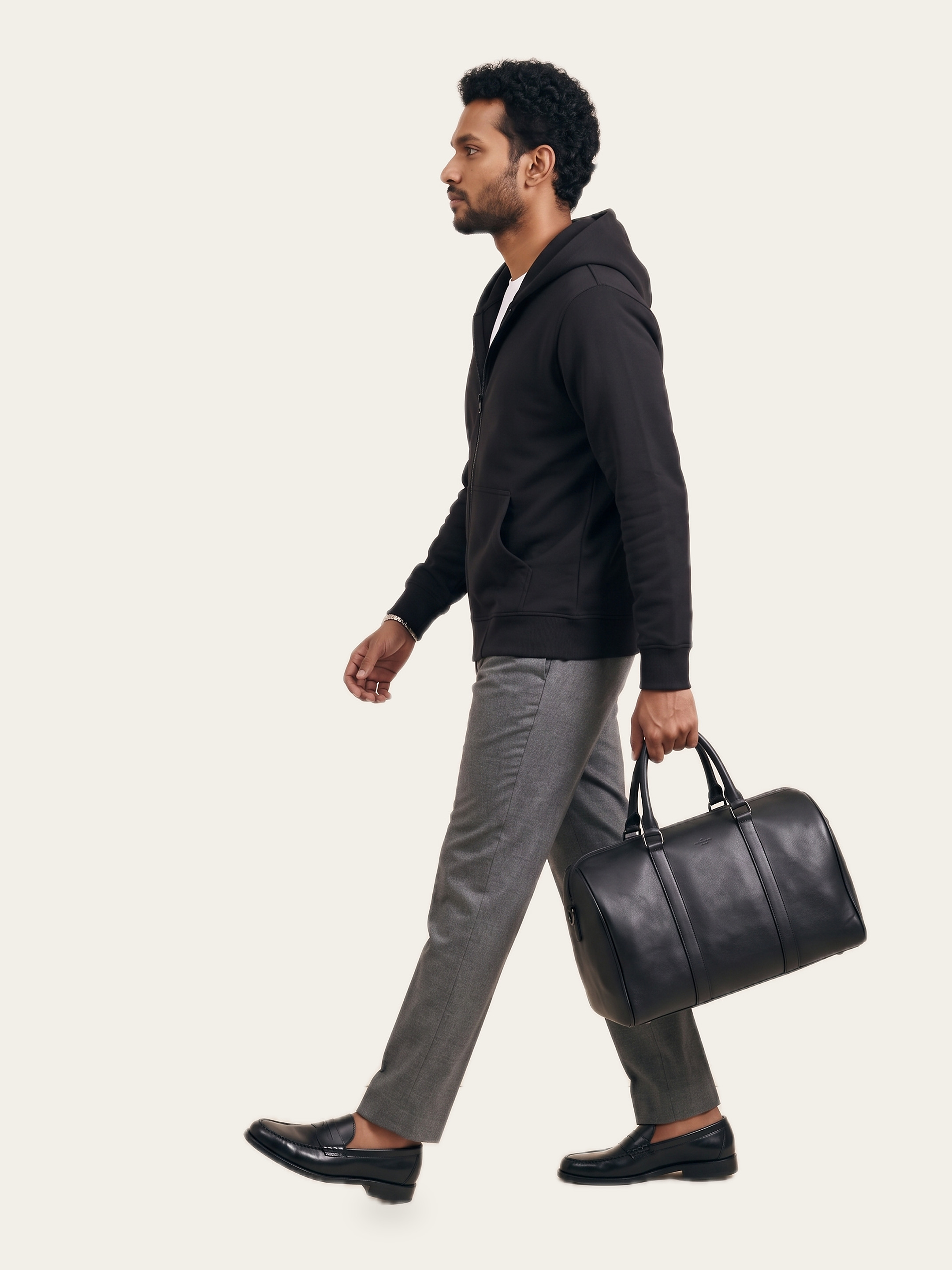
Because it is a full zip, it handles temperature swings well: you can wear it open over the sweatshirt on a mild morning and shut it fully on a cold one. When the sun comes out, it comes off in one move and folds into a bag.
What GSM means for layering through temperature swings
GSM is grams per square metre, a measure of fabric weight. The higher the number, the heavier and warmer the cloth. Here are the weights in this system:
| Layer | Piece | Weight |
|---|---|---|
| Base | CORE Long Sleeve Tee | 180 GSM |
| Middle | SIGNATURE or 11 Sweatshirt | 300 GSM |
| Outer | ORIGINAL Zip Hoodie | 400 GSM |
Notice how the weights step up. A base that is much lighter than the middle keeps the pile from feeling bulky. If you want to read more, see our hoodie GSM guide.
A day of temperature swings, layer by layer
- 6:30 a.m., cool: all three layers on, zip closed.
- 9 a.m., mild: zip open, or hoodie off and in your bag.
- 1 p.m., warm: just the long sleeve tee, sleeves pushed up if needed.
- 7 p.m., cooling: sweatshirt back on for the ride home.
The system only works if you carry the layers, so a roomy bag matters. Folding the hoodie flat and rolling the sweatshirt gets both into most backpacks.
Fit tips that keep layers comfortable
Each of these is a regular fit, so they are cut to sit over each other without pulling as you add and remove layers through temperature swings. Each product page has a Size guide link beside the size options, with that piece’s own measurements. If you are between sizes, think about which layer you will wear alone most often and size to that. Our post on layering for air-conditioned offices applies the same thinking to indoor cold.
How to pack the layers
Fold the zip hoodie in half along the zip, then roll the sweatshirt and tuck it inside. This keeps both compact and stops creases. If you are heading out for a full day, put the layers at the top of your bag so you can reach them without unpacking everything.
A note on the sun and the season
Layers matter most when the weather is undecided and temperature swings are wide. In the peak of summer or the deep of winter, you may not need the full stack. Use it in the in-between weeks and adjust as your city’s weather settles.
Keep it cheaper by building over time
You do not need all three at once to handle temperature swings. Start with the tee and a sweatshirt. That covers most of the year in warm cities. Add the zip hoodie when you want the outer layer for the coldest mornings.
All pieces are made to order in India and made for you once you reserve them, with free shipping across India.
Common mistakes with temperature swings
- Wearing the heaviest piece first. If your innermost layer is thick, you have nothing light to take down to. Always put the lightest on the inside.
- Choosing layers that all fit tightly. Tight layers squeeze together and feel warmer than they should. Regular fits, as here, leave a little air between layers, and that air is what keeps you warm.
- Forgetting the bag. A layer you cannot carry becomes a layer you leave at home.
- Ignoring the neck and wrists. Ribbed cuffs and hems hold warmth in. The sweatshirt and hoodie here both have them.
Colour combinations that work
Since all three pieces are plain, colour is easy. A few pairings:
- All dark: Noor Black tee, Noor Black or Neel Blue sweatshirt, Noor Black hoodie.
- Light to dark: Rui White tee, Neel Blue sweatshirt, Noor Black hoodie.
- One accent: Arav Green tee under a Noor Black sweatshirt, so the green shows only at the wrists and hem.
For more on how to pair the six colours, read two-colour outfit pairs.
Where this system suits best
It suits any place with big temperature swings between morning and afternoon: hill stations, inland cities in the cooler months, and any office with strong air-conditioning. In steady weather you may need only the first two layers. Adjust the system to your own city and your own habits.
When you are ready, see the full shop and Reserve what fits your week.
FAQs
How do I dress for temperature swings from cold mornings to hot afternoons?
Wear three layers you can remove one at a time: a light base tee, a mid-weight sweatshirt and a zip hoodie. Dress for the coldest hour and take layers off as it warms up.
Why is a zip hoodie better for layering?
A full zip can be opened partway or taken off in one move, without pulling anything over your head.
What is GSM?
GSM means grams per square metre and shows fabric weight. Higher numbers mean heavier, warmer cloth, so a 400 GSM hoodie is warmer than a 180 GSM tee.
Do I need all three layers?
No. For milder temperature swings, a long sleeve tee and a sweatshirt cover most of the year in warm cities. Add the zip hoodie for the coldest mornings.