
Which is warmer and which is softer
Fleece is warmer. French terry is cooler and smoother. Both are soft, but in different ways: fleece has a fuzzy, brushed inside that traps warm air, while French terry has small loops inside that feel smooth against the skin and let the fabric breathe. If your winter is cold, pick fleece. If it is mild, humid or somewhere in between, pick terry.
The two fabrics look alike on a hanger, which is why people mix them up. The difference is on the inside of the cloth, and you feel it in about ten seconds. Here is what each one is, how it behaves, and what we make in each.
What French terry is
French terry is a knit with a smooth face and a looped inside. Turn a French terry piece inside out and you will see tiny loops of yarn. Those loops give the fabric body and some absorbency, and they keep it from sticking to your skin on a warm day. It is heavier than a plain jersey tee but not as insulating as fleece.
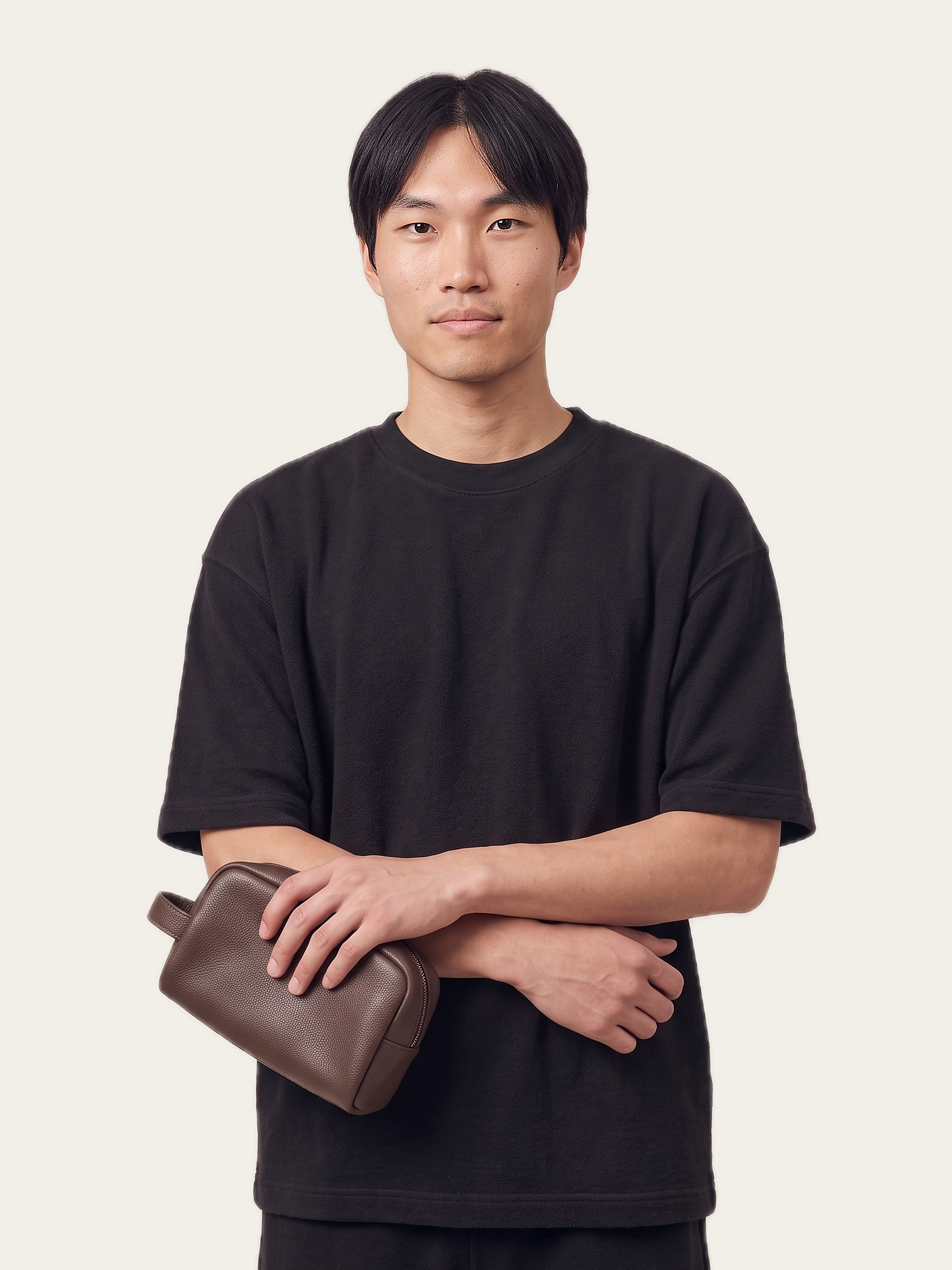
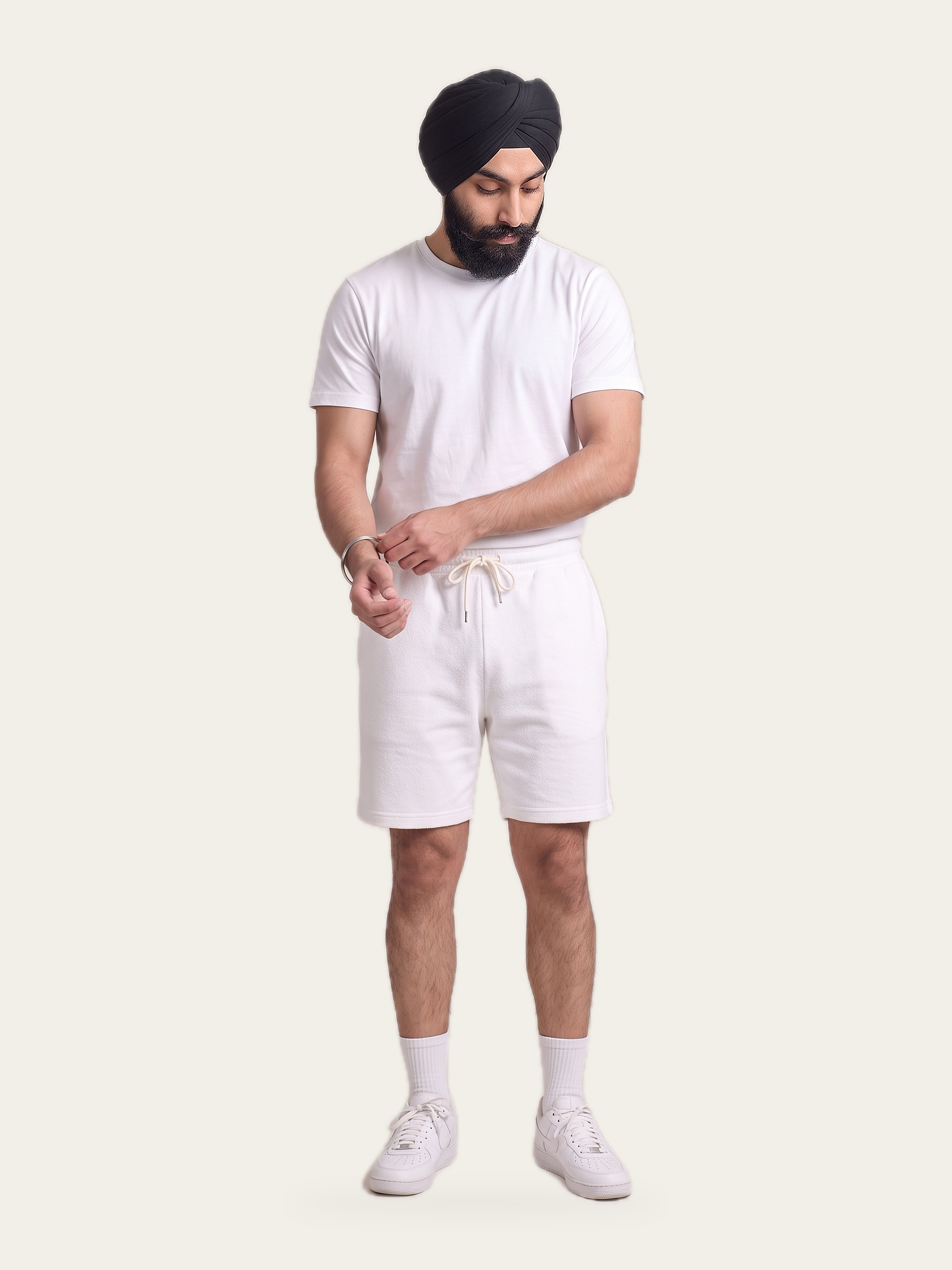
We use looped French terry in two Solids pieces. The LOOP Oversized Tee (₹899) is a roomy, drop-shoulder tee in looped French terry, available in Noor Black and Rui White. The LOOP Shorts (₹999) are soft French terry shorts with an elastic drawstring waist and side pockets, in Noor Black, Rui White and Gulabi Pink.
What fleece is
Fleece starts as a knit with a looped inside too, but the inside is then brushed. Brushing raises the fibres into a soft nap, like the surface of a blanket. That nap holds a layer of air against your body, and trapped air is what keeps you warm.
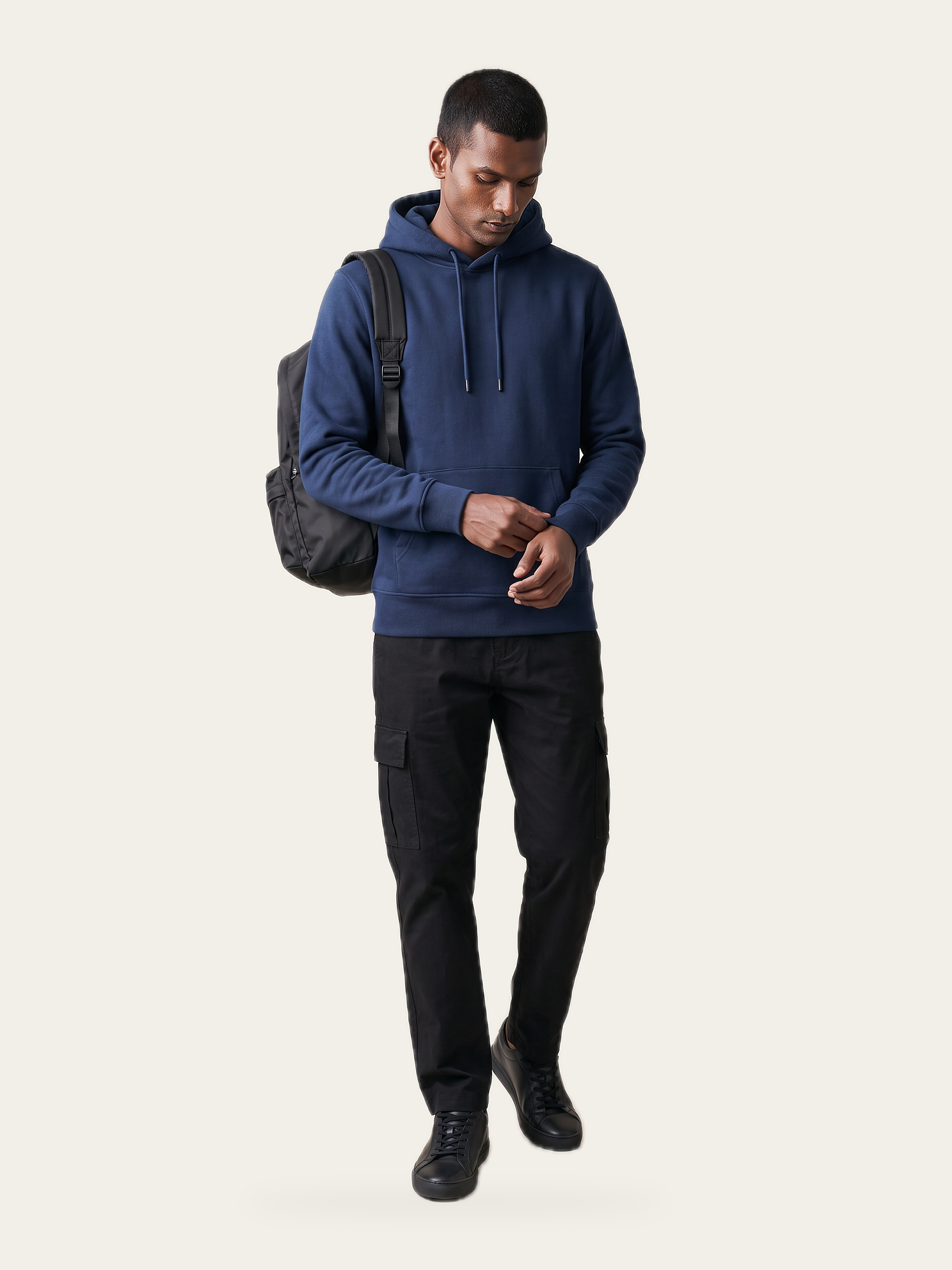
Our ORIGINAL Hoodie (₹1,299) is a 300 GSM brushed cotton fleece hoodie with a lined hood and a front pouch pocket, in a unisex regular fit. It comes in all six of our permanent colours. It is the piece to reach for when the morning is properly cold.
Side by side
| French terry | Brushed fleece | |
|---|---|---|
| Inside surface | Small loops | Brushed, fuzzy nap |
| Feels | Smooth, slightly textured | Fluffy, cosy |
| Warmth | Light to medium | Medium to high |
| Breathability | Better | Lower |
| Best in | Mild, humid or changeable weather | Cold mornings and evenings |
| Our examples | LOOP Oversized Tee, LOOP Shorts | ORIGINAL Hoodie |
Warmth also depends on weight and cut, so treat the table as a tendency, not a law. A very heavy terry can be warmer than a thin fleece. A close-fitting fleece feels warmer than a loose one because less air escapes.
Temperature guide
This is a rough guide for an Indian year, since most of us live between “warm” and “very warm” with a short winter.
- Above about 28°C: neither, unless you are in an air-conditioned room. LOOP Shorts are fine indoors.
- About 20–28°C: French terry. The LOOP Oversized Tee is comfortable and does not overheat you.
- About 12–20°C: fleece, or terry with a layer over it. The ORIGINAL Hoodie works over a tee or on its own.
- Below about 12°C: fleece under a jacket. This is hill-station and north-India winter weather.
These numbers are only a rough guide. People feel temperature differently, and wind, humidity and how long you are outside change everything.
Softness is not the same as warmth
People often say “soft” when they mean two different things. Fleece is soft in a fuzzy way: it feels like a blanket. French terry is soft in a smooth way: it feels like a well-worn tee. If you have sensitive skin or dislike the feeling of fuzz on your arms, terry may feel more comfortable even in cool weather. If you love the blanket feeling, fleece is worth the extra warmth.
Another difference is how each one feels when you sweat. Terry loops give the fabric a little room to breathe, so it feels better on the way to the office or the train. Fleece can feel heavy and warm once you are moving, so it is better for sitting, standing and slow walks.
Why weight matters as much as the loops
People compare terry and fleece as if the fabric name settles everything. It does not. GSM, the yarn and the cut all move the result. A light terry at a low GSM is a summer fabric. A heavy terry can be a proper winter layer. A thin fleece is a shoulder-season layer, while a 300 GSM fleece like the one in our ORIGINAL Hoodie is a cold-morning piece.
So when you shop, read three things together: the fabric name, the GSM if it is given, and the fit. A close fit traps more warmth. A loose fit lets air move, which is why an oversized terry tee feels so easy in warm weather. If a product page does not list a GSM, do not assume; look at the fabric name and the product photos, and treat the size guide as the guide to fit.
A note on Indian weather
Much of India has a short, mild winter and a long warm season. That makes French terry the more useful everyday fabric for most people, and fleece the special-occasion warm layer. Many wardrobes work best with one fleece hoodie for the coldest weeks and terry pieces for the rest of the year. If you travel north in winter, pack the fleece. If you stay in a coastal city, you may barely use it.
Care for both
Wash both gently, cold or lukewarm, and turn the piece inside out. The inside is the part that makes each fabric what it is: loops in terry, nap in fleece. Rough washing flattens both. Dry in shade if you can. Heat and hard spinning are what age these fabrics fastest.
A soft reminder about heavier fabrics: they take longer to dry. Give a hoodie a full day, and do not fold it away damp. Our guide on how to fold and store hoodies covers the rest.
Which should you pick?
- Ask what temperature you will wear it in. Cold: fleece. Mild: terry.
- Ask what you will do in it. Sitting and slow days: either. Moving and commuting: terry.
- Ask what you already own. If your wardrobe has three hoodies, a terry tee is a better addition. If it has none, start with a fleece hoodie.
If you want more on how these terry pieces work as loungewear, read our loungewear guide to LOOP and EASE.
FAQs
Is French terry warmer than fleece?
Usually not. Fleece has a brushed, fluffy inside that traps more air, so it is warmer at the same weight. French terry has small loops inside, which feel cool and let the fabric breathe. That is why terry suits mild weather.
Which is softer, French terry or fleece?
Both are soft in different ways. Fleece feels fuzzy and cosy. Terry feels smooth and slightly textured, and it stays comfortable when you sweat.
What does GSM mean in fabric?
GSM is grams per square metre. It tells you how much fabric there is in a given area, so a higher number usually means a thicker, heavier cloth. Our ORIGINAL Hoodie is 300 GSM brushed cotton fleece.
Can I wear French terry in an Indian winter?
In cities with mild winters, yes, especially layered. For colder mornings and hill stations, fleece is the better choice.
When you have decided, Reserve yours in the shop.