The short answer: what dries, what does not
Among monsoon fabrics, thin and light ones dry fastest, and thick, looped or fleece ones dry slowest. Polyester knits generally dry quicker than cotton, but they can feel warmer against skin. Light cotton is a good middle path. Heavy terry and fleece are best kept for dry days indoors. Air movement matters as much as the fabric itself.
That is general knowledge about monsoon fabrics, not a lab result, and your own home matters a great deal. A balcony with a breeze dries a tee faster than a shaded bathroom with the door closed. Still, if you know how monsoon fabrics behave, you can pick clothes that suit a wet season instead of fighting it.
Why weight changes everything for monsoon fabrics
GSM means grams per square metre. It tells you how much fabric sits in each square metre. More fabric means more material to hold water, and more material to dry. If you want a refresher, our guide on how to read a garment label explains GSM, blends and rib in plain English.
For monsoon fabrics, think in three rough bands.
- Light, around 180 GSM: the CORE Crew Tee, CORE Long Sleeve Tee and CORE Sleeveless Tee are all listed at 180 GSM cotton. These are the easiest of our cotton pieces to dry and to rotate.
- Mid, around 220 to 240 GSM: the CORE Piqué Polo is 220 GSM, and the FORM Oversized Tee is a 240 GSM cotton tee. They take longer to dry than a light tee, but they hold their shape well.
- Heavy, 260 GSM and above: the ESSENCE Terry Tee is 260 GSM, and our fleece hoodies run to 300 and 400 GSM. These are the slowest to dry, so treat them as dry-day clothes.
Cotton in the rain: soft, breathable, a little slow
Cotton is the most familiar of the monsoon fabrics: a natural fibre that absorbs water easily. That is why it feels comfortable in humid heat: it takes up sweat instead of letting it sit as a film on your skin. The trade-off is that a soaked cotton tee stays damp for a while, and damp cloth in humid air can start to smell if you leave it bunched up.
The CORE Crew Tee is a 180 GSM cotton crew in a unisex regular fit, mid-weight and soft from the first wear. It costs ₹749 and comes in Noor Black, Rui White, Agni Red, Neel Blue, Arav Green and Gulabi Pink. For a wet week, it is the piece we would put on rotation, because it is light enough to dry between wears if you hang it well.

If you carry your tee through a full day of commuting, the CORE Sleeveless Tee is the lightest option we make in cotton. It is 180 GSM, light and breathable, in a unisex regular fit, for ₹749 in Noor Black or Rui White. There is less fabric on the body, so there is less to get wet and less to dry.

Polyester knits: quick to dry, different to wear
Synthetic fibres such as polyester do not soak up water the way cotton does. The water tends to sit on the surface and evaporate, which is why sports kits are mostly made from them. Among monsoon fabrics, that can be a real advantage for a shirt you need dry by tomorrow morning.
The trade-off with these monsoon fabrics is comfort. Polyester usually feels warmer and less breathable than cotton in still, humid air, so it suits people who care more about drying speed than softness.
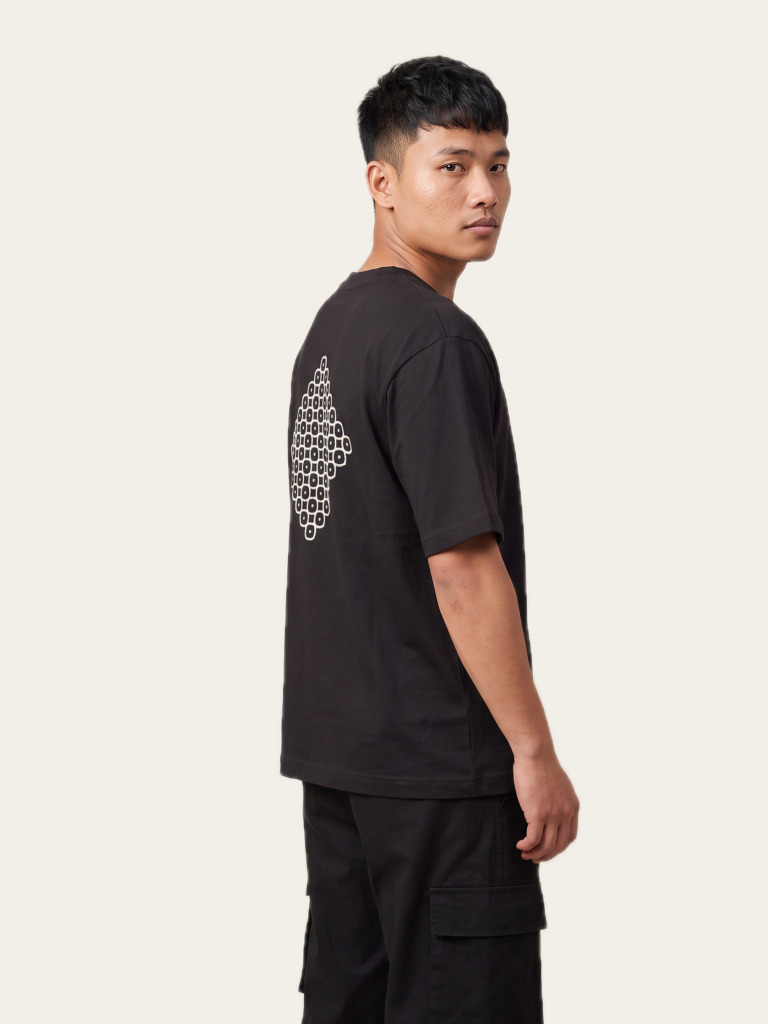
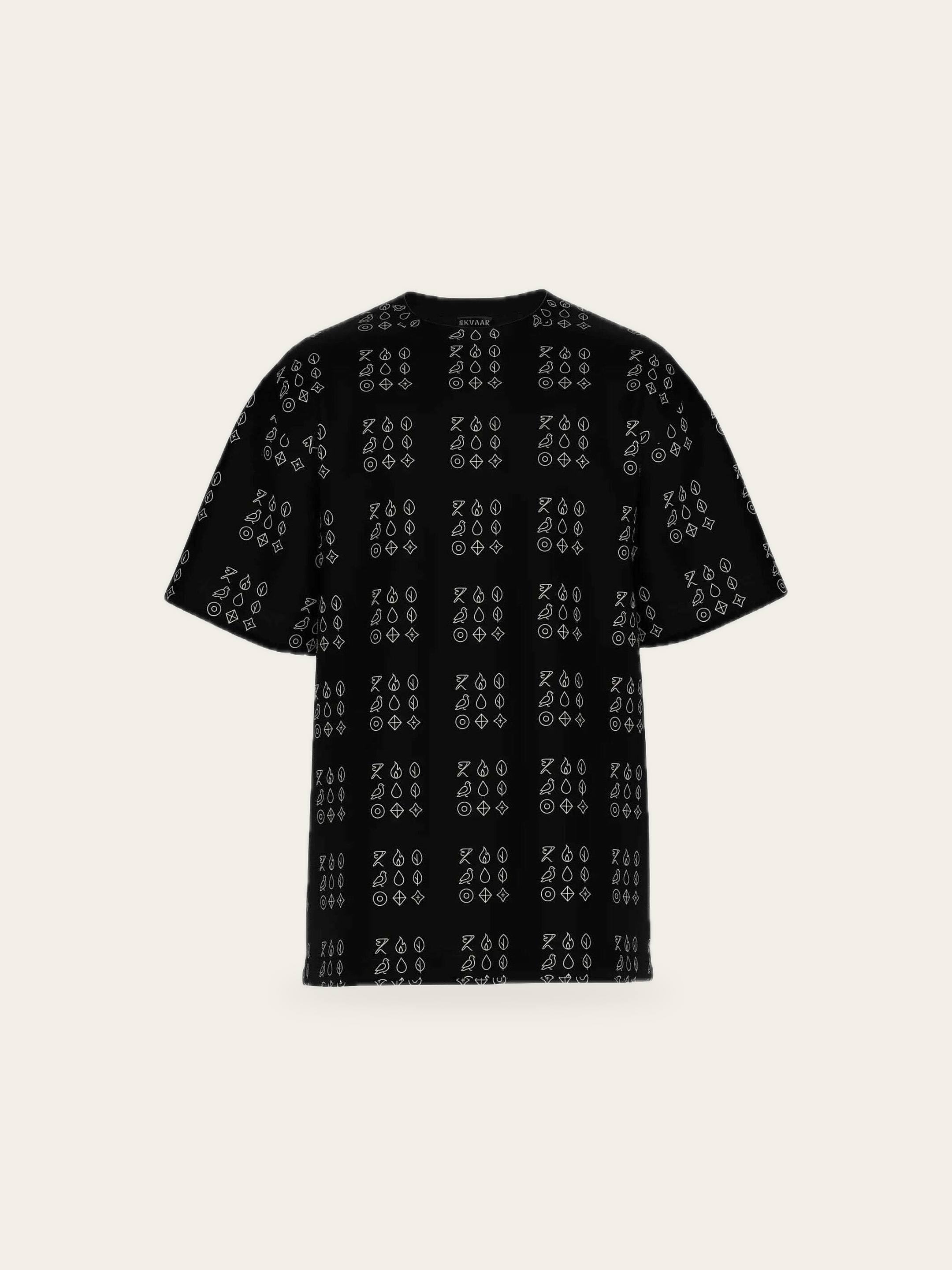
We make one piece like this. The Kaal Grid Oversized Tee is a 240 GSM micro-knit polyester tee with a folded neck and an all-over EKVAAR glyph grid. It is ₹699 and belongs to the Street house. Its matching Kaal Grid Shorts are ₹699 too, in the same 240 GSM micro-knit polyester, with a drawstring waist. We do not list colours on these pages, so check the product page for what is offered.
Cotton with a little stretch
The FLEX Crew Tee is 95% cotton and 5% elastane. That small amount of elastane gives a light natural stretch that keeps the tee’s shape. It costs ₹849, comes in all six of our colours, and is a good choice if you are moving a lot in a wet, crowded commute.
Stretch does not change how water behaves much. It is still mostly cotton. What it changes is how the tee sits on a body that is damp and moving.
Terry and fleece: enjoy them, but not in the rain
Terry has small loops on one side. Those loops are what make it soft and thick, and they also hold moisture. Fleece is dense and brushed, and it stays wet for a long time once it is soaked through. Neither is a mistake in the monsoon, since air-conditioned rooms and cool evenings do happen. They just should not be your rain-day layer, because they are the slowest monsoon fabrics to dry.
The LOOP Shorts are soft French terry with an elastic drawstring waist and side pockets, for ₹999 in Rui White, Noor Black or Gulabi Pink. They suit slow days at home. If you do wear them out and get caught in rain, expect them to take longer to dry than a thin cotton short would.
The same goes for the ESSENCE Terry Tee, the LOOP Oversized Tee, and every hoodie and sweatshirt we make. Wear them for the office chill or a dry evening, and keep them out of the downpour.
How monsoon fabrics behave in different Indian cities
The South Asian monsoon is not the same everywhere. As a general idea, coastal cities such as Mumbai, Chennai and Kochi tend to feel humid for longer stretches, so slow-drying clothes can stay damp for a while indoors. Cities such as Bengaluru and Pune usually feel cooler and less sticky, so heavier pieces can still work on some days. Delhi and Kolkata each have their own version of the wet season. We are not giving figures here, because the weather changes from year to year. Check your local forecast and your own home’s airflow.
Our guide on which fabric suits which Indian city goes deeper on the year-round picture.
A practical routine for monsoon fabrics
- Rotate light tees. Two or three light cotton tees, worn in turn, are easier to keep dry than one favourite you wear daily.
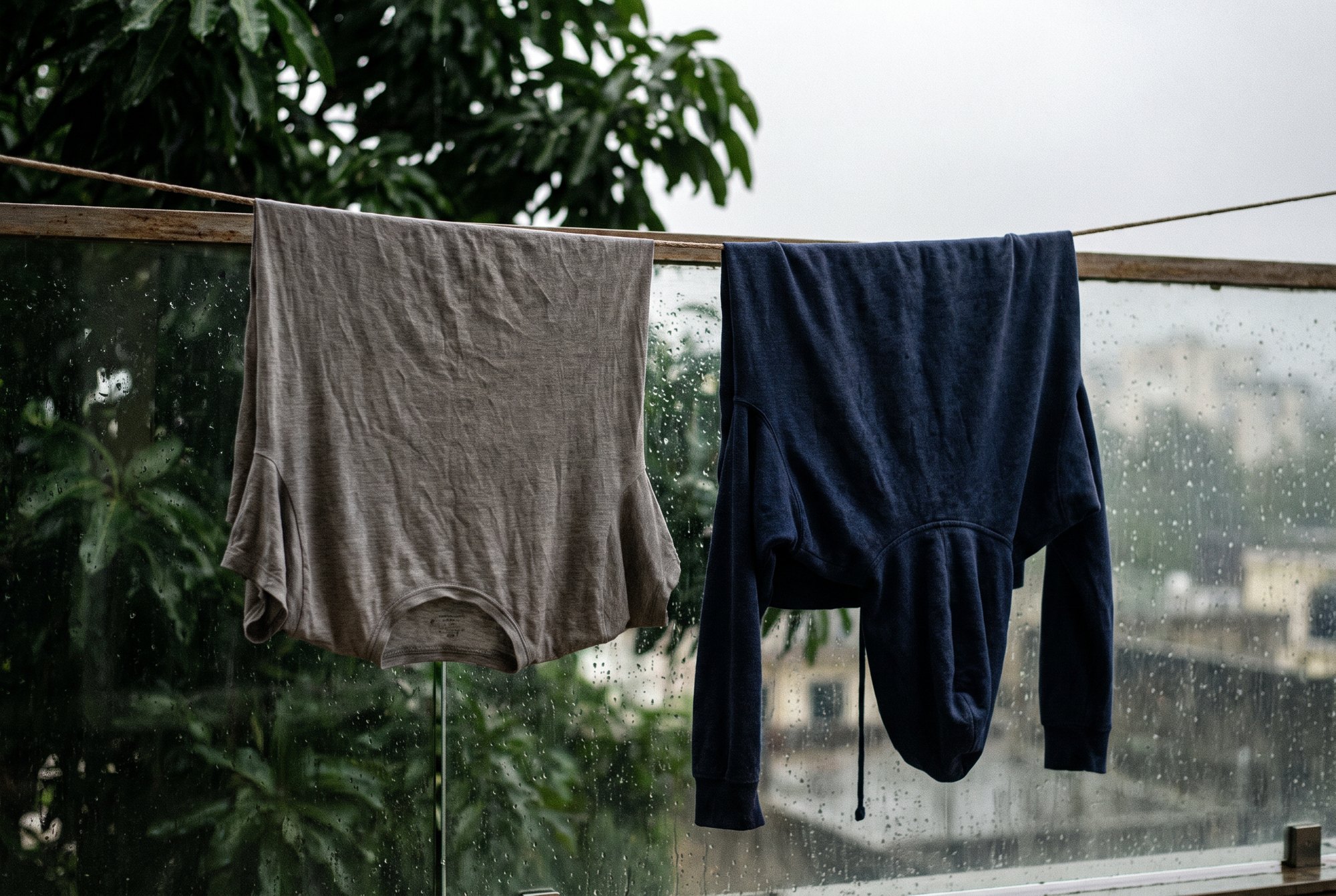
- Hang, do not bunch. Air needs to reach both sides of the cloth. A wide hanger or a rack near a window works better than a corner.
- Never store damp. Put clothes away only when fully dry. Damp cloth in a closed cupboard is where musty smells begin.
- Wash colours gently. Turn tees inside out and use cool water. Our note on why clothes shrink, fade and bobble covers the reasons.
- Keep heavy pieces for dry days. Save your fleece and terry for indoors, and use the lighter monsoon fabrics, thin cotton or a polyester knit, outside.
A small shortlist of monsoon fabrics
| Piece | Fabric | Price | Best for |
|---|---|---|---|
| CORE Sleeveless Tee | 180 GSM cotton | ₹749 | Humid commutes, layering under a shirt |
| CORE Crew Tee | 180 GSM cotton | ₹749 | Everyday rotation |
| FLEX Crew Tee | 95% cotton, 5% elastane | ₹849 | Moving a lot, staying shaped |
| Kaal Grid Oversized Tee | 240 GSM micro-knit polyester | ₹699 | Faster drying, Street look |
| LOOP Shorts | French terry | ₹999 | Dry days at home |
Everything is made to order in India, made for you once you reserve it, and ships free across India.
FAQs
Which fabric dries fastest in the monsoon?
As a general rule, the fastest monsoon fabrics are thin synthetic knits such as polyester, and light cotton comes next. Thick terry and fleece dry slowest. Your home’s airflow makes a big difference too.
Is cotton a bad choice for the rainy season?
No. Cotton is one of the most comfortable monsoon fabrics, breathable and soft in humid heat. It simply dries more slowly than synthetics, so pick a light weight, such as 180 GSM, and rotate a few pieces.
Can I wear a hoodie in the monsoon?
Yes, on dry days or in cool, air-conditioned rooms. Heavy fleece takes a long time to dry, so avoid wearing it in heavy rain.
How do I stop clothes smelling musty in humid weather?
Dry them fully before folding, hang them with space around each piece, and do not leave damp clothes in a closed bag or cupboard.
Ready to build a wet-season set? Browse the shop at your own pace.