The short answer: how to set a wardrobe budget
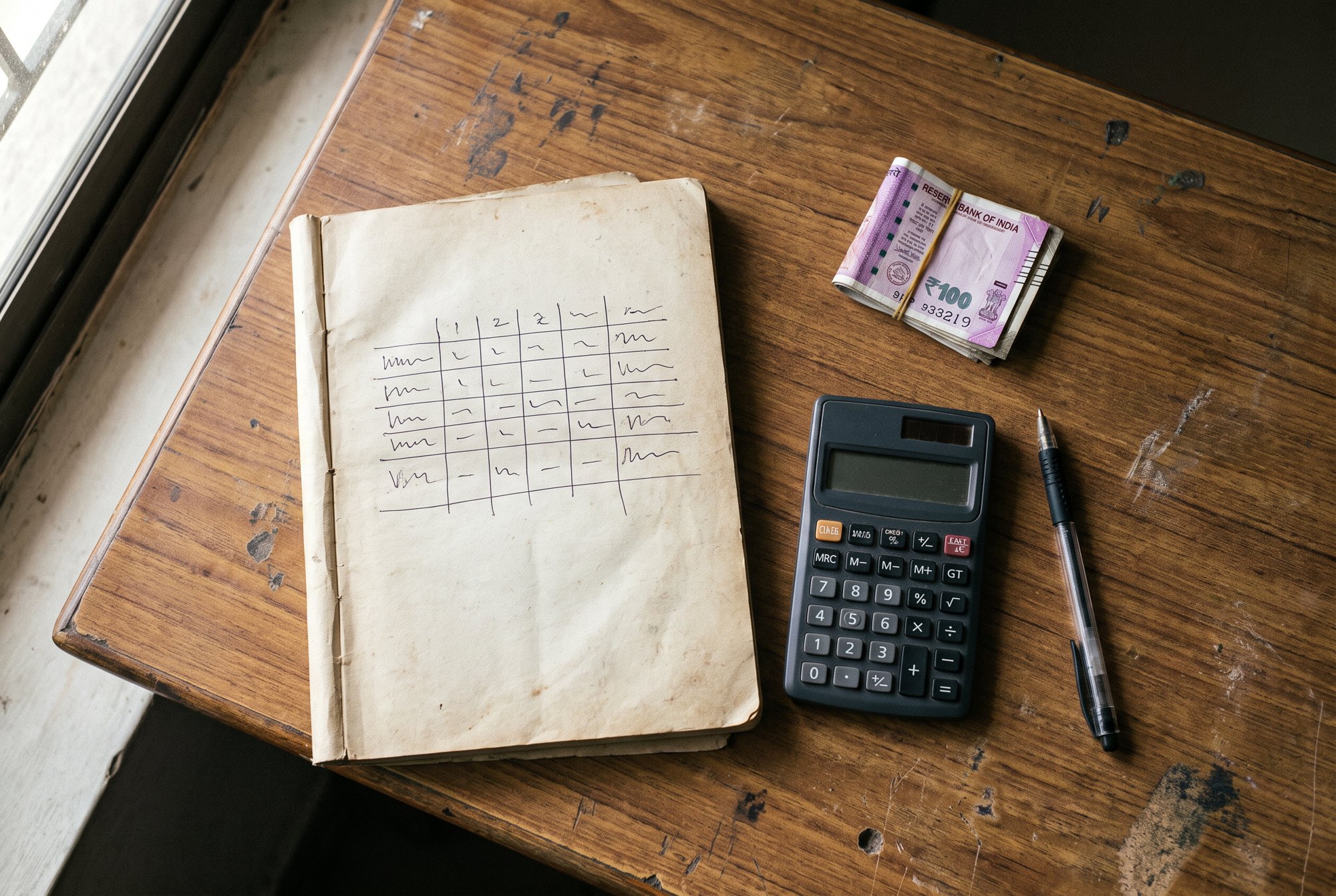
To set a wardrobe budget, start with a number you are comfortable spending in a year, divide it into what you wear most, and buy the everyday pieces first. Tees and a hoodie take the largest share, because they are worn most. Bottoms come next, then one or two extras. Below are three worked plans, at roughly ₹5,000, ₹10,000 and ₹15,000, using real EKVAAR prices, plus a simple way to build your own.
These are examples, not advice on what you should earn or spend. Adjust them to your life. The point is to see, in rupees, what a small, well-chosen wardrobe costs.

Step 1: pick a yearly number
Look at what you spent on clothes over the last year. Most people are surprised, in either direction. Then pick a wardrobe budget you can live with. Divide it by 12 if you like to think monthly, as you would with any personal budget. For example, ₹12,000 a year is ₹1,000 a month.
Step 2: split your wardrobe budget by how often you wear things
A useful rough split is to give the biggest share to what you wear the most. For many people that means:
- Tees and tops: about 40 per cent
- Warm layers (hoodie or sweatshirt): about 25 per cent
- Bottoms: about 25 per cent
- Extras (cap, polo, one special piece): about 10 per cent
That split is only a starting point. If you live somewhere warm, move the hoodie share to tees. If you work in an office, add a polo.
To see the split in rupees, take a yearly wardrobe budget of ₹10,000. Tees and tops at 40 per cent is ₹4,000, warm layers at 25 per cent is ₹2,500, bottoms at 25 per cent is ₹2,500, and extras at 10 per cent is ₹1,000. Notice how the real plans below drift from those percentages. A hoodie costs more than a tee, so it takes a bigger share than its count suggests. That is normal. Use the split as a check, not a rule.
Where it is worth spending a little more
Put extra wardrobe budget where the piece is worn hardest. For most people that is the hoodie or sweatshirt, then the everyday tee, then the bottoms. Spend less where wear is light, such as a cap or an occasional-use layer. A better fabric on a daily piece pays back faster than a better fabric on something you wear a few times a year.
Plan A: about ₹5,000
This is a start-small wardrobe budget, along the lines of our first five pieces under ₹5,000.
| Piece | Colour idea | Price |
|---|---|---|
| CORE Crew Tee | Noor Black | ₹749 |
| CORE Crew Tee | Rui White | ₹749 |
| DAILY Tee | Neel Blue | ₹649 |
| ORIGINAL Hoodie | Noor Black | ₹1,299 |
| EASE Joggers | Neel Blue | ₹1,149 |
| Total | ₹4,595 |
Three tees, one hoodie, one bottom. It covers a working week with a little laundry planning, and every piece mixes with the rest.
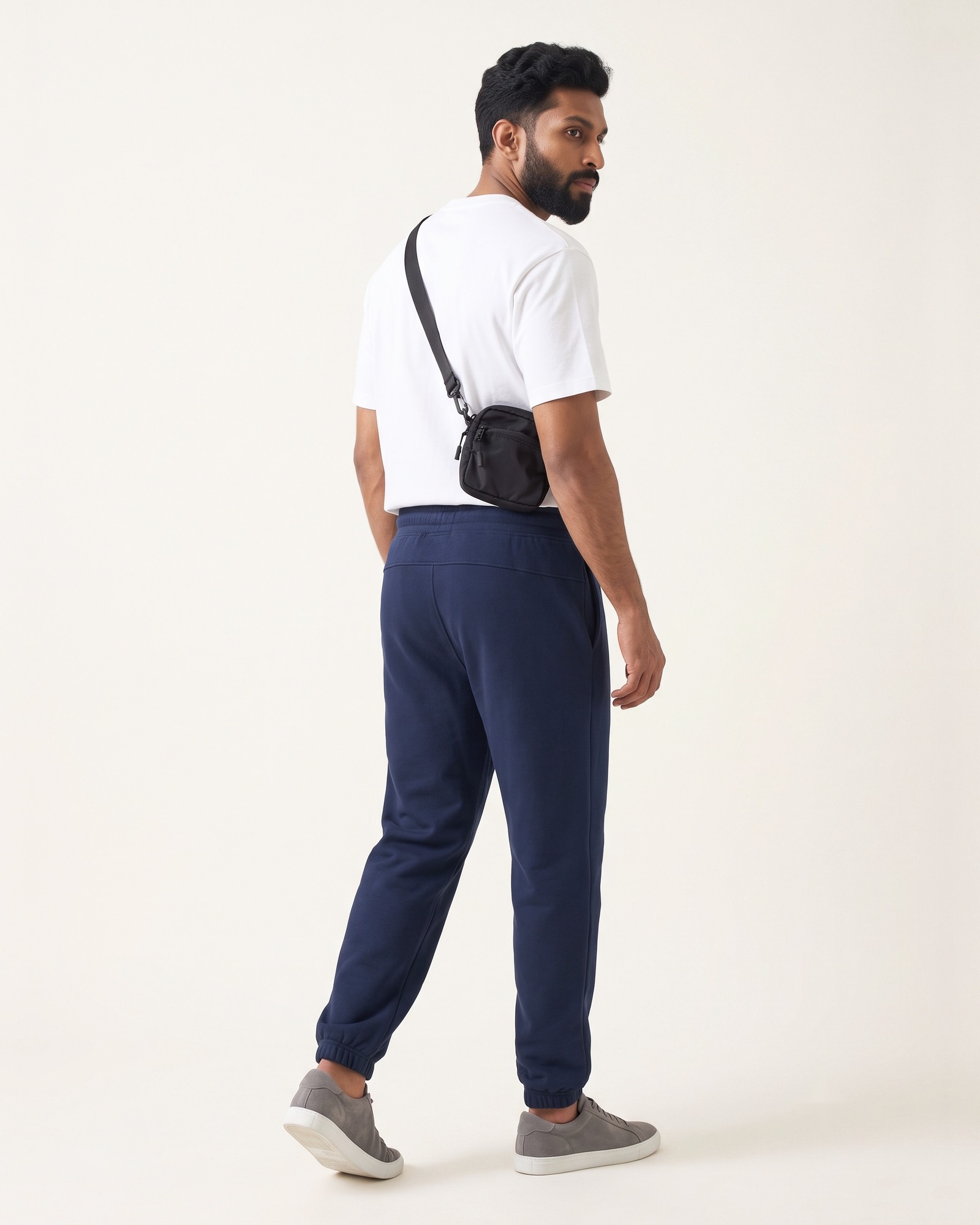
Plan B: about ₹10,000
With this wardrobe budget you add variety and a second layer, still with plain colours.
| Piece | Colour idea | Price |
|---|---|---|
| CORE Crew Tee x 2 | Noor Black, Rui White | ₹1,498 |
| BASE Crew Tee | Rui White | ₹699 |
| CORE Piqué Polo | Neel Blue | ₹999 |
| CORE Long Sleeve Tee | Arav Green | ₹799 |
| ORIGINAL Hoodie | Noor Black | ₹1,299 |
| CORE Pullover Hoodie | Neel Blue | ₹1,249 |
| EASE Joggers | Noor Black | ₹1,149 |
| EASE Sweatpants | Noor Black | ₹1,249 |
| Signature Cap | Rui White | ₹599 |
| Total | ₹9,540 |

Plan C: about ₹15,000
Add a heavier layer, an oversized cut and one heavyweight tee, for a wardrobe that handles warm days, cool evenings and travel. Start from Plan B (₹9,540) and add:
- ORIGINAL Zip Hoodie, a 400 GSM full-zip in Noor Black or Rui White: ₹1,799
- ARCHIVE Oversized Hoodie in Arav Green: ₹1,499
- ESSENCE Terry Tee, a 260 GSM terry tee in 90% cotton, in Rui White: ₹2,099
- CORE Supima Tee in Rui White: ₹999
The total comes to ₹15,936. By now you have five layers or more, so check our note on how many hoodies you actually need before adding more.

Step 3: check the cost per wear
Price alone can mislead. A quick check is to divide the price by the number of times you expect to wear the piece.
- CORE Pullover Hoodie at ₹1,249, worn 100 times: about ₹12.49 a wear.
- CORE Crew Tee at ₹749, worn 60 times: about ₹12.48 a wear.
- A ₹499 top worn 5 times: about ₹100 a wear.
Those numbers are illustrations. Your own wear counts will differ. What matters is the habit: buy what you will wear again and again. For more, read our cost per wear guide.
What to leave out of a first wardrobe budget
Some things look small on a bill and add up. Trend pieces you will wear twice, a third pair of nearly identical bottoms, and bulk buying because a price looks tempting are the usual ones. A steadier approach is to leave a little of the budget unspent. If nothing in your wardrobe is missing by the end of the year, you have saved that money, and that is a good result too.
It also helps to count what you already own before you plan. Lay everything out, note what is worn out, and mark which gaps are real. A wardrobe budget starts from the gaps, not from a blank page. Someone who already has three good tees only needs a hoodie and bottoms. Someone starting from scratch needs the full Plan A. Your list will look different from anyone else’s, and that is exactly the point of writing it down in rupees.
Step 4: buy in rounds
You do not have to spend the whole wardrobe budget at once. Buy the first round of tees and one hoodie. Live with them for a month. Then decide what is missing. This tends to save money, because you stop buying things that looked good in theory but do not fit your week.
Checking your plan at the end of the year
Once the year is done, add up what you spent and list what you wore. Which pieces did the most work? Which never left the shelf? That one page tells you more about your next wardrobe budget than any rule. If your hoodie and two tees carried most of the year, spend more there next time. If a piece was never worn, spend less on that kind of clothing. Over a couple of years, the plan becomes very much your own.
A simple monthly habit
- Set aside a fixed amount each month into a clothes fund.
- Keep a note of what you wear and what you skip.
- When a real gap shows up, spend from the fund.
- Do not spend just because the fund has built up.
Every EKVAAR piece is made to order in India, made for you once you reserve it, with free shipping across India, so there is no rush to grab something before it disappears. You can plan the next round of your wardrobe budget at your own pace.
FAQs
How much should I spend on clothes in a year?
There is no single right figure. A common approach is to pick a wardrobe budget that fits your income and stick to it. The plans above show what ₹5,000, ₹10,000 and ₹15,000 can buy in real pieces.
Is it better to buy fewer, better pieces?
For daily wear, usually yes, because a piece worn often costs less per wear. It only works if you actually wear what you buy, so start with clothes that match your routine.
How do I work out cost per wear?
Divide the price by the number of times you expect to wear it. A ₹1,249 hoodie worn 100 times costs about ₹12.49 per wear. A cheaper piece worn ten times can end up costing more.
Should I buy everything at once?
Not necessarily. Buying in two or three rounds lets you see what you wear and what you skip before you commit to the rest.
When you are ready, browse the full EKVAAR range.